
The Turing test, originally called the imitation game by Alan Turing in 1950, is a test of a machine's ability to exhibit intelligent behavior that is equivalent to, or indistinguishable from, that of a human. Turing proposed that human evaluators would assess natural language conversations between humans and machines designed to generate human-like responses. The evaluator will realize that one of the two partners in the conversation is a machine, and all participants will be separate from each other. Conversations will be limited to text-only channels, such as keyboards and computer screens, so that the output is independent of the machine's ability to translate words as speech. If the evaluator cannot reliably distinguish a machine from a human, the machine is said to have passed the test. The test results will not depend on the machine's ability to provide correct answers to questions, only on how similar the answers given to humans are.
This test was introduced by Turing in his 1950 paper "Machine Computing and Intelligence" while working at the University of Manchester. It opens with the words: "I propose to consider the question, Can machines think?" relatively unambiguous." Turing described a new form of the problem in terms of three-person games called "imitation games", in which an interrogator asks questions of a man and a woman in another room to determine the correct gender of both players. Turing's new question was: "Is there an imaginable digital computer that would do well in imitation games?" This question, Turing believes, is a perfectly answerable one. In the remainder of his paper, he challenges all major objections to the proposition that "machines can think".
Since Turing introduced his test, it has been highly influential and widely criticized, and has become an important concept in the philosophy of artificial intelligence. Some of his criticisms, such as John Searle's China room, are themselves controversial.
Tests by which humans judge whether a computer or an alien are intelligent was an established convention in science fiction in the 1940s, and it's likely that Turing would have realized this. Stanley G. Weinbaum's "A Martian Odyssey" (1934) provides an example of how such a test can be nuanced.
Previous examples of machines or robots trying to become human include the Ancient Greek myth of Pygmalion making a statue of a woman animated by Aphrodite, Carlo Collodi's novel The Adventures of Pinocchio, about a doll who wants to become a real boy. and E. T. A. Hoffmann's 1816 story "The Sandman", in which the protagonist falls in love with a robot. In all of these examples, people are tricked by artificial beings who - to a certain point - look like humans.
The material above was delivered by a presenter from Ukraine in an international visiting lecturer held by STEKOM University in collaboration with Universities from Ukraine. The presenter's name is Oleksii Panasenko. He is a Lecturer at the Vinnitsia State Pedagogical University
(Ukraine), Ph.D. in Mathematics. He is also a data scientist at NestLogic Inc. His interest in science is in mathematics: fractal analysis. Meanwhile, his interest in teaching is working with mathematically gifted pupils; mathematical olympiads. In addition he has an interest in all things related to machine learning, data science, AI. The time for the visiting lecture to be held is on May 12 2023 with initial remarks by Dr. Joseph Teguh Santoso who is the Chancellor of STEKOM University and guided by Mrs. Novita.
This international webinar activity is part of the implementation of STEKOM University's commitment to increase various international activities. This was done in order to realize the vision to become an international-class university. Various international activities carried out by STEKOM University continue from year to year. There are international activities that are sustainable and there are also some international activities that are not sustainable. All types of international activities are accommodated and regulated by the International department of STEKOM University.
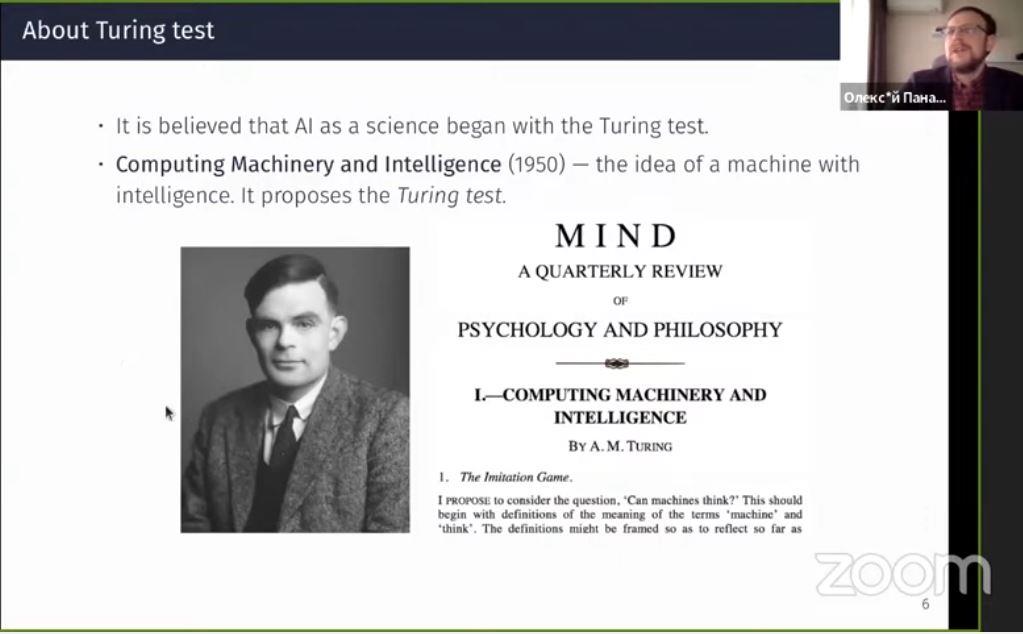
Visiting lecture with Faculty from Vinnytsia Pedagogical University (Ukraine).
Visiting Lecturer
Back to News
Visiting Lecturer
Thursday, May 25, 2023
Priyadi, S.Kom, M.Kom
0 Views