
A teacher, also called a school teacher or formally an educator, is a person who helps students to acquire knowledge, competence or virtue through teaching practice. Informally the role of the teacher can be taken by anyone (for example when showing colleagues how to do a certain task). In some countries, teaching school-age children may take place in an informal setting, such as within the family (homeschooling), rather than in a formal setting such as a school or college. Some other professions may involve multiple teachers (eg youth workers, pastors).
In most countries, teaching formal students is usually done by paid professional teachers. This article focuses on those who are trained, as their primary role, to teach others in a formal education context, such as in a school or other place of formal initial education or training.
The role of a teacher can vary across cultures. Teachers may provide instruction in reading and arithmetic, vocational or vocational training, arts, religion, civics, community roles, or life skills. Formal teaching duties include preparing lessons according to an agreed curriculum, delivering lessons, and assessing student progress.
A teacher's professional duties can go beyond formal teaching. Outside the classroom, teachers can accompany students on field trips, supervise study rooms, help organize school functions, and serve as superintendents of extracurricular activities. They also have a legal obligation to protect students from harm, such as that which may result from bullying, sexual harassment, racism, or mistreatment. In some educational systems, the teacher may be responsible for student discipline.
Teaching is a very complex activity. This is partly because teaching is a social practice, which takes place in a particular context (time, place, culture, socio-political-economic situation, etc.) and is therefore shaped by the values of that specific context. Factors influencing what teachers expect (or need) include history and tradition, social views of educational goals, accepted theories of learning, etc.
The competencies required of a teacher are influenced by the various ways in which the role is understood around the world. In general, there seem to be four models:
- teachers as teaching managers;
- teacher as a caring person;
- teachers as expert learners; And
- the teacher as a cultural and civic person.
The Organization for Economic Co-operation and Development argues that it is necessary to develop a common definition of the skills and knowledge needed by teachers, to guide career-long education and professional teacher development. Several evidence-based international discussions have attempted to reach this common understanding. For example, the European Union has identified three broad competency areas needed for teachers:
- Work with other people
- Working with knowledge, technology and information, and
- Work in and with the community.
The scientific consensus is emerging that what teachers need can be taken under three headings:
- knowledge (such as: the subject matter itself and knowledge of how to teach it,
- curricular knowledge, knowledge of educational science, psychology, assessment etc.)
- craft skills (such as early lessons, using teaching technology,
- managing students and groups, integrating and assessing learning, etc.) and
- dispositions (such as essential values and attitudes, beliefs and commitments).
The material above was delivered by a presenter from Ukraine in an International Visiting Lecturer held by STEKOM University in collaboration with Universities from Ukraine. The presenter's name is Oleksii Panasenko. He is a Lecturer at the Vinnitsia State Pedagogical University
(Ukraine), Ph.D. in Mathematics. He is also a data scientist at NestLogic Inc. His interest in science is in mathematics: fractal analysis. Meanwhile, her interest in teaching is working with mathematically gifted students; Math Olympiad. In addition he has an interest in all things related to machine learning, data science, AI. The time for carrying out the lecture visitation is on May 12 2023 with an initial remark by Dr. Joseph Teguh Santoso who is the chancellor of STEKOM university and guided by Mrs. Novita.
This international webinar activity is part of the implementation of STEKOM University's commitment to increase various international activities. This was done in order to realize the vision to become an international-class university. Various international activities carried out by STEKOM University continue from year to year. There are international activities that are sustainable and there are also some international activities that are not sustainable. All types of international activities are accommodated and regulated by the International department of STEKOM University.
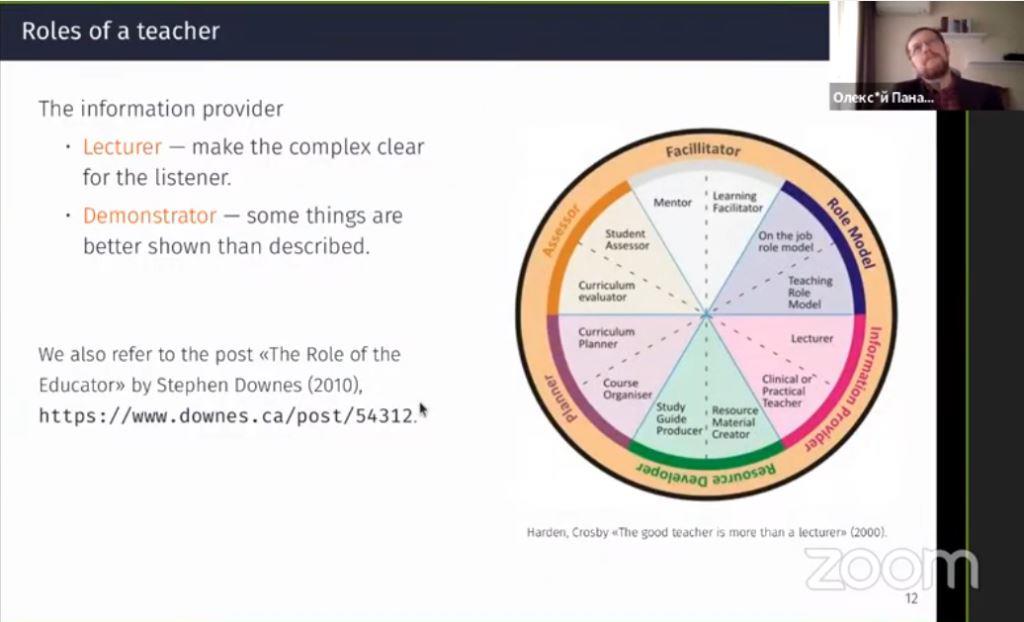
Visiting lecture with Faculty from Vinnytsia Pedagogical University (Ukraine) Part 6
Visiting Lecturer
Back to News
Visiting Lecturer
Thursday, June 8, 2023
Priyadi, S.Kom, M.Kom
0 Views