
The thinking that ultimately led to AI started in the minds of science fiction writers and scientists in the early 20th century. Metropolis, a science fiction film starring an artificially intelligent robot, premiered in 1927, and I Robot, a collection of visionary short stories by Isaac Asimov, was published in 1950. Asimov envisioned the Three Laws of Robotics, as well as a computer that could answer questions by storing human knowledge.
In their 1943 publication "A Logical Calculus of the Immanent Ideas in Nervous Activity," Warren McCulloch and Walter Pitts proposed that logical functions could be performed by artificial networks of neurons, now known as artificial neural networks (ANNs). In 1943, Alan Turing, inventor of the Turing test, which essentially let humanity determine when machines acquired intelligence, and neuroscientist William Gray Walter, creator of the first autonomous robot known as the "turtle", began working together on intelligent machines.
1943 – First JST
Warren McCulloch and Walter Pitts' A Logical Calculus of the Ideas Immanent in Nervous Activity was published in 1943. In it, the two discussed the potential logical functions performed by artificial networks of neurons.
Artificial neural networks (ANNs) now work in much the same way that McCulloch and Pitts envisioned in the 1940s. Modern AI functionality relies on ANNs to enable 'learning'. Consequently, one of the major advances in artificial intelligence was its debut.
1948 – First Autonomous Robot
Elmer and Elsie, designed by William Gray Walter in 1948, was a great milestone in the history of AI. These two robots are the first to work alone, without human assistance. They can use light and touch to get past obstacles.
1955 – Official requirements and academic recognition
The invention of the phrase artificial intelligence is perhaps one of the most significant breakthroughs in this field. In 1955, computer scientist and AI "founder" John McCarthy coined the phrase "artificial intelligence".
The Dartmouth College Meeting, which took place in the summer of 1956, was the next project. This conference is the first to recognize AI as a legitimate academic subject matter.
1956 - The Dartmouth Conference
The phrase "artificial intelligence" was coined at a Dartmouth College summer workshop led by professor John McCarthy. Experts in the fields of machine learning and networking come together for the events to generate new ideas and debate how to approach AI. The summer agenda included neural networks, computer visits, natural language processing, and more.
1964 – First Chatbot- ELIZA
There is ELIZA, the world's first chatbot before Alexa and Siri became figments of the creator's idea. ELIZA was developed by Joseph Weizenbaum at MIT as an early application of natural language processing. He couldn't speak, so he communicated via text.
ELIZA talks about early implementations of language preparation routines, which require computer instructions to communicate with us in human language.
It's not like they asked us to program them in PC code or cooperate through the user interface. ELIZA couldn't speak like Alexa, so she had to rely on materials to communicate. He lacks the necessary skills to benefit from his interactions with others. He is ready for future attempts to solve the communication barrier between humans and robots.
1969 – Backpropagation
Backpropagation is now an important aspect of AI. This essentially allows a neural network to learn from its mistakes. While that may sound unappealing, it means that AI can be taught to improve its performance over time. As a result, AI can grow increasingly adept at making decisions. Backpropagation is thus one of the moments of DAS artificial intelligence. This concept was born in 1969 and became popular in 1986.
1970 – First 'intelligent' robot
Although autonomous robots had existed for decades in 1970, it was only after the creation of 'Shakey' that they could reason through their actions. Shakey the Robot, unlike its predecessors, does not require instructions at each individual step of a difficult procedure. Rather, it can dissect and analyze orders. As a result, Shakey became a significant milestone in AI history: the first physical robot controlled by AI.
1978 – Voice-activated technology
If you were a child in the late 1970s or early 1980s, you are probably familiar with Speak & Spell. This language learning game is able to teach the correct spelling and pronunciation of words by being able to “speak” to children. It's also the first time a human vocal tract has been duplicated electronically on a single silicon chip. As a result, we're better prepared for something that's only recently become popular: voice-activated technology.
1980 – Formative Stage (XCON)
By the late 1960s, AI's appeal had waned somewhat, despite the fact that millions of dollars had been invested and the field was still far from over. By the 1980s, however, the "AI winter" had passed. From 1980 to 1986, XCON Digital Equipment Corporation's expert learning systems were credited with saving the company $40 million per year.
This was a defining moment for AI as it showed that it is not only a cool technological achievement but also has practical implications. This app is more focused and uses AI to solve specific problems. Businesses are starting to recognize the impact AI is having on their operations and the potential cost savings. In fact, companies were investing $1 billion a year in AI systems by 1985 as a result.
1981 – Commercialized AI
'Expert systems' rose and fell in popularity in the early 1980s. As the name implies, this is a computer system that can make decisions similar to human experts. Expert systems hold promise for solving complex problems for enterprises and are commercially viable. During its heyday, two-thirds of Fortune 500 companies used expert systems. However, since they didn't live up to the hype, their time was limited.
Statistical Methodology In 1988
A Statistical Approach to Language Translation published by IBM researchers, incorporates probability ideas into the previously rule-driven field of machine learning. It addresses the problem of human to human translation between French and English.
This marked a shift in emphasis from training programs to define rules to creating programs to calculate the probabilities of various outcomes based on the information (data) they were taught. This is often considered a significant step forward in terms of simulating the cognitive processes of the human brain, and is the foundation of machine learning as we know it today.
1998 – Furby and machine learning
The Furby was released just in time for Christmas in 1998. In the first three years after its release, more than 40 million units were sold. But what makes Furby such a watershed moment in AI?
Furbies appear to have a false intelligence, learning languages over time. They popularized the concept of machines that could learn and communicate with humans. In other words, they cloud the idea of AI invading our homes.
2001 – A.I. Artificial intelligence
A.I., directed by Stephen Spielberg, was released in 2001. David, a humanoid boy robot who can love and show feelings like a real child, is the film's protagonist. AI is unique in that it regularly shifts David's perspective, despite the fact that sci-fi depictions of artificial intelligence in film were nothing new in 2001. David craved love and belonging more than he craved for his own success. As a result, the film sparks sympathetic thoughts about how artificial intelligence might integrate into the world around us.
2005 – 5 Autonomous Vehicles Complete DARPA Grand Challenge
No self-driving car completed the 100-kilometer off-road route through the Mojave desert when the first DARPA Grand Challenge took place in 2004. Five cars did it in 2005! This competition helps advance self-driving technology.
The Beginning of the Internet
When CERN researcher Tim Berners-Lee introduced hypertext transfer protocol (HTTP), the world's first online website, in 1991, made it possible to share connections and data online wherever you are. Since data is the fuel for artificial intelligence, Lee's Berners-work is undoubtedly responsible for the advancement of AI to date.
2011 – Voice assistant
Siri, Apple's voice-controlled virtual assistant, was also released in 2011. Siri is still considered one of the most popular examples of artificial intelligence. For casual users, Siri's use of speech recognition and natural language processing (NLP) is revolutionary. It is also the first (advanced) version of the now ubiquitous technology, with Alexa and Google in our homes and Siri in our pockets.
2015 - Machines "See" Better Than Humans
The annual ImageNet challenge in 2015 demonstrated that machines can recognize and describe a library of 1,000 photos better than humans. Image recognition has proven to be a difficult task for AI.
Since the competition started in 2010, the accuracy rate of the winning algorithm has increased from 71.8 percent to 97.3 percent, prompting researchers to argue that computers can recognize objects in visual data better than humans.
2016- AI Beats World Champion Alphago
In 2016, AlphaGo, the Google subsidiary created by Deep Mind, defeated the world Go champions in five meetings. While Go moves can be defined mathematically, the game's sheer number of permutations (nearly 100,000 possible initial moves in Go vs. 400 in Chess) makes a brute force approach impossible. AlphaGo uses neural networks to learn and then learns while playing the game to win.
Autonomous Vehicles on the Road
Self-driving cars are a prominent use case for VR today — an app that has captured the public's imagination more than any other. 2018 marked a watershed moment for autonomous vehicles, as self-driving taxi service Waymo in Phoenix, Arizona, hit the road. And it's not just for the sake of testing.
Waymo One, the world's first commercial autonomous car rental service, is currently used by 400 people who pay to be driven to their schools and offices within a 100 square mile radius.
While a human operator should accompany each vehicle to monitor its performance and take control in an emergency, this is definitely a big step forward towards the vision of where self-driving cars become a reality for all of us.
The material above was delivered by a presenter from Ukraine in an international visiting lecturer held by STEKOM University in collaboration with Universities from Ukraine. The presenter's name is Oleksii Panasenko. He is a Lecturer at the Vinnitsia State Pedagogical University
(Ukraine), Ph.D. in Mathematics. He is also a data scientist at NestLogic Inc. His interest in science is in mathematics: fractal analysis. Meanwhile, his interest in teaching is working with mathematically gifted pupils; mathematical olympiads. In addition he has an interest in all things related to machine learning, data science, AI. The time for the visiting lecture to be held is on May 12 2023 with initial remarks by Dr. Joseph Teguh Santoso who is the Chancellor of STEKOM University and guided by Mrs. Novita.
This international webinar activity is part of the implementation of STEKOM University's commitment to increase various international activities. This was done in order to realize the vision to become an international-class university. Various international activities carried out by STEKOM University continue from year to year. There are international activities that are sustainable and there are also some international activities that are not sustainable. All types of international activities are accommodated and regulated by the International department of STEKOM University.
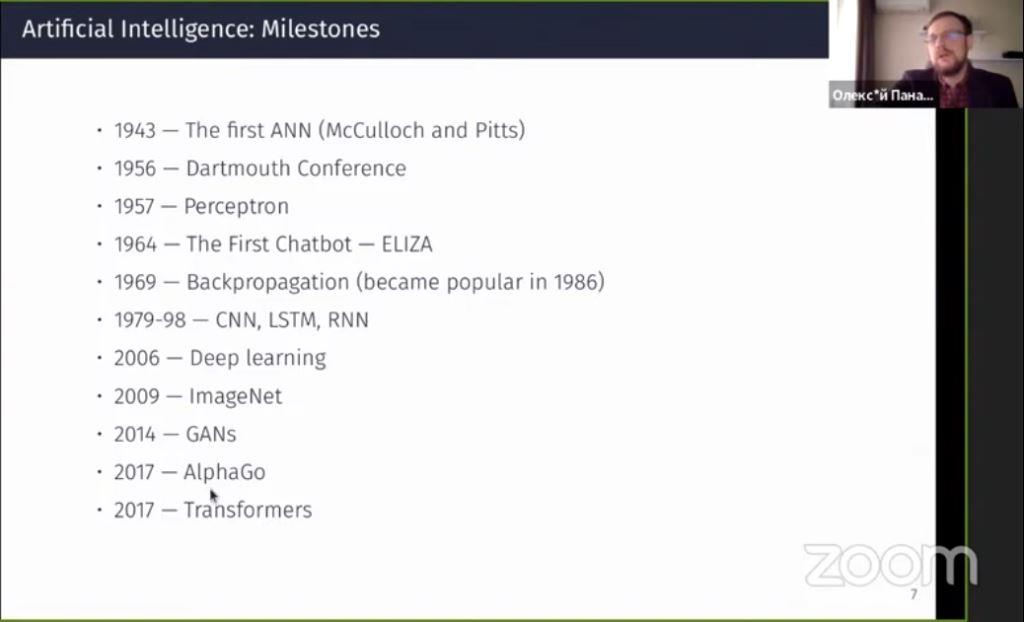
Guest lecture with Faculty from Vinnytsia Pedagogical University (Ukraine) Part 2
Visiting Lecturer
Kembali ke Berita
Visiting Lecturer
Kamis, 25 Mei 2023
Priyadi, S.Kom, M.Kom
0 Dilihat