
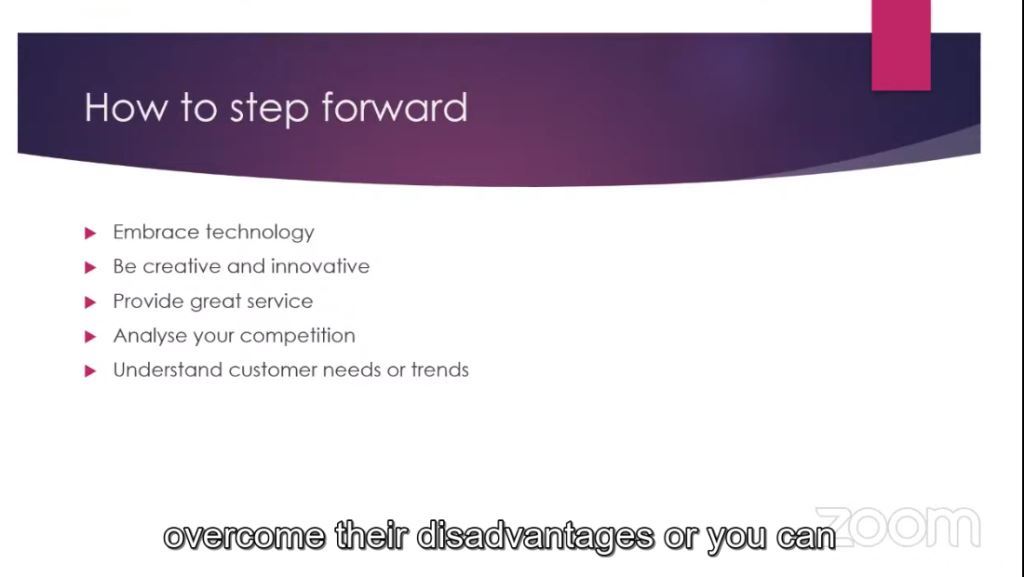
Academics from Malaysia say that one way to move forward in modern business culture is to understand customer needs or trends. Understanding your customers is the key to business success. Learn how to make your product or service meet customer pain points along the customer journey. Customers make or break a business. Companies that satisfy the needs of buyers are more profitable, while those that do not will lose buyers and may fail.
Even so, some businesses don't pay much attention to customer expectations. Instead, they chase trends or chase ideas from their bigwigs, assuming that they know what buyers are interested in. And companies that check customer needs often don't do it often enough to keep up with a rapidly changing world.
Today, data is undoubtedly the main driver of business success. How well companies are able to harness insights from the ever-increasing richness and complexity of available data is increasingly the differentiator between market leaders and also-rans.
The potential of data to enable us to better understand and adapt to changing customer behavior is one of its most powerful features. At the societal level, it is used to address the spread and consequences of the Covid-19 pandemic by enabling us to understand people's activities and movements. Many of the techniques used for this were first developed by businesses – in finance, companies have become adept at preventing fraud by detecting outside behavior that could signal something fishy is going on. In marketing, it is used to generate a "360-degree customer view" that helps identify those who are ready to make a buying decision and places products and services firmly in their line of sight. Whether it's about projecting the spread of a pandemic or predicting what people will buy, data increases our understanding of the world around us, and that includes all the different people who live in it!
The basic principle is that the more you know about your customers, the more accurately you can predict what they want. You can also send it in the way they are most comfortable with. A great analogy I like to use here is tuna fishing. Initially it was a very hit and miss job – a fleet of ships were going out, with a bit more information to work with than anywhere they had been successful in the past.
Fishing for customers involves the same principle. If you don't continually improve your ability to use data to pinpoint their location and understand their behavior, you will be outdone by everyone else.
Transactional and point-of-sales data are the obvious starting points for many businesses. It tells us what people buy how much they pay for it and allows us to understand broad consumer trends as well as local preferences. This helps us design products and services that we believe people will spend on. It also allows us to optimize prices – pricing our products at a level where we believe they will sell.
This material was delivered by a presenter from Malaysia in an international webinar entitled "Business culture: how to step forward" which was held by STEKOM University in collaboration with Universiti Perlis Malaysia, Singapore University of social science, PTIC and various other parties. The name of the presenter from Malaysia is DR MOSD SHAHIDAN SHAARI who is a lecturer at the Faculty of Applied and Human Science Universiti Malaysia Perlis.
This international webinar activity is part of the implementation of STEKOM University's commitment to increase various international activities. This was done in order to realize the vision to become an international-class university. Various international activities carried out by STEKOM University continue from year to year. There are international activities that are sustainable and there are also some international activities that are not sustainable. All types of international activities are accommodated and regulated by the International department of STEKOM University.
International Webinar 2022 - Business culture, how to step forward - part 7
International Webinar
Kembali ke Berita
International Webinar
Rabu, 4 Januari 2023
Priyadi, S.Kom, M.Kom
0 Dilihat