
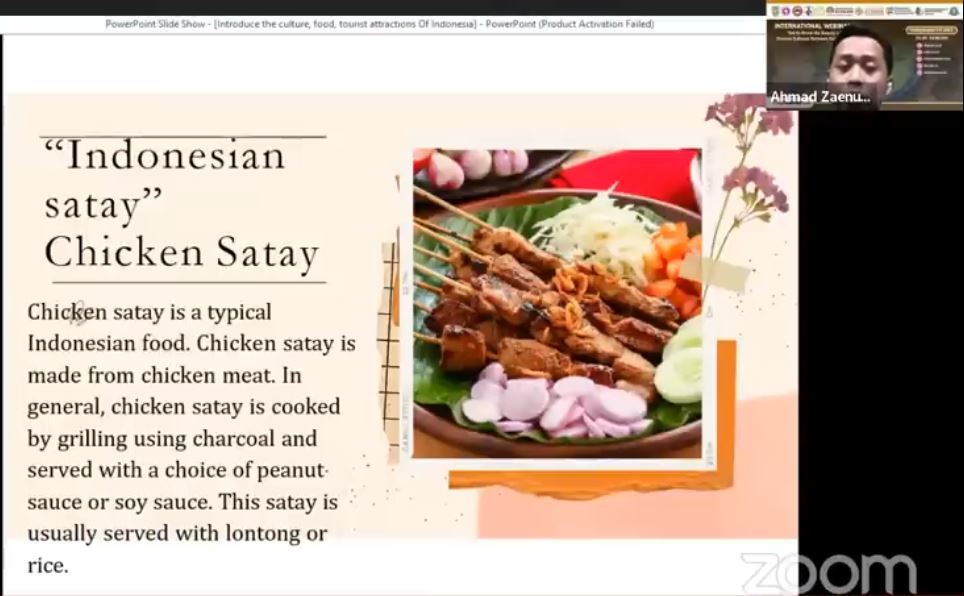
Indonesian academics explain the traditional satay food in an international webinar. Chicken satay is a typical Indonesian food. Chicken satay is made from chicken meat. In general, chicken satay is cooked by burning it using charcoal and served with a choice of peanut sauce: chili sauce or soy sauce. This satay is usually served with lontong or rice.
Sate or satai is a food made from meat which is cut into small pieces and skewered in such a way with a bone stick from coconut or bamboo leaves, then grilled using charcoal coals. Satay is served with a variety of spices depending on the satay recipe variations. Meat that is used as satay includes chicken, goat, lamb, beef, pork, rabbit, horse, and others.
Sate is known to originate from Java, Indonesia, and can be found anywhere in Indonesia and has been considered one of Indonesia's national dishes. Sate is also popular in other Southeast Asian countries such as Malaysia, Singapore, the Philippines and Thailand. Sate is also popular in the Netherlands because it is influenced by Indonesian cuisine, which used to be a colony.
Sate is a very popular dish in Indonesia, with various ethnic groups and traditions of the art of cooking (see Indonesian cuisine) producing various types of satay. In Indonesia, satay can be obtained from traveling satay traders, street vendors at roadside stalls, to upscale restaurants, and is often served at formal and non-formal parties. Recipes and how to make satay vary depending on the variations and recipes for each region. Almost all kinds of meat can be made satay. As the country of origin of satay, Indonesia has many variations of satay recipes.
Usually satay is given a sauce, which can be in the form of soy sauce, peanut sauce, or something else, usually accompanied by pickles made from sliced shallots, cucumbers and bird's eye chilies. Satay is eaten with warm rice or it can also be served with lontong or rhombus or just satay.
International dishes similar to satay include yakitori from Japan, shish kebab from Turkey, shashlik from Caucasians, chuanr from China, and sosatie from South Africa. Sate is listed as ranked 14th in the World's 50 most delicious foods (50 Most Delicious Dishes in the World) through a reader poll conducted by CNN Go in 2011.
There are many satay recipes in the world. However, by and large satay recipe is as follows. Turmeric or soy sauce is one of the important spices to flavor the skewers and provide color. There are many varieties of satay meat, for example mutton, chicken, beef, lamb, pork, fish, shrimp, squid, rabbit, quail eggs or offal. Some of the meat is exotic meats that are less common, such as turtle meat, turtle meat, crocodile, horses, lizards and snakes. The meat that has been skewered and seasoned with the marinade glaze is then baked in the coals of charcoal until cooked.
Sate can be served with peanut sauce or sweet soy sauce, accompanied by sliced shallots and cucumber. Served with hot white rice, ketupat, or lontong. Pork satay usually uses a pineapple-based sauce, or sweet soy sauce.
The above material was presented by presenters from Indonesia in an international webinar held by STEKOM University in collaboration with Universities from Mexico, Ukraine, Ethiopia and various other parties. The presenter's name is Ahmad Zaenuri, M.Si who is a lecturer and head of the entrepreneurship study program at STEKOM University. The title of the presentation he delivered was "Introduce the culture, culinary, tourist attractions of Indonesia as a nation's economic asset".
This international webinar activity is part of the implementation of STEKOM University's commitment to increase various international activities. This was done in order to realize the vision to become an international-class university. Various international activities carried out by STEKOM University continue from year to year. There are international activities that are sustainable and there are also some international activities that are not sustainable. All types of international activities are accommodated and regulated by the International department of STEKOM University.
International Webinar 2022 - Get to know the beauty of diverse cultures between countries – Part 18
International Webinar
Kembali ke Berita
International Webinar
Minggu, 29 Januari 2023
Priyadi, S.Kom, M.Kom
0 Dilihat