
At an international webinar held by Stekom University on August 18 2022, an academic from the United States gave a presentation on "technology in gastronomic tourism". The academic's name is Elva Saldana Alvarez. Ms. Elva's scholarly reputation is not arbitrary. Ms. Elva holds a Masters degree in Food, which she earned in 2013 from Cornell University. Ms. Elva also has a BBA in Gastronomy earned in 2010 which is a Baja California State University Degree with an honorable mention. Mr. Setyo Nugroho gave a further profile regarding Ms. Elva.
This activity is part of the implementation of STEKOM University's commitment to increase various international activities in order to realize the vision to become an international-class university. Various international activities carried out by STEKOM University continue from year to year. There are international activities that are sustainable and there are also some international activities that are not sustainable. All types of activities are accommodated internationally and regulated by the International department of STEKOM University.
The following is a detailed list of experiences from Ms. Elva:
1. Deputy Director, Teacher | OENOLOGY AND GASTRONOMY FACULTY | UNIVERSIDAD AUTONOMA DE BAJA CALIFORNIA 2019 teacher of the following subjects: food service, operations management in the food service industry
2. Owner, manager | KWARACHI RESTAURANT | 2016-2017
3. Overseer | BODEGAS DE SANTO TOMAS | 2014-2016
4. CPL ele LT) ira | CALIFORNIA STEEL STATE UNIVERSITY| 2008-2015 | School of Oenology and Gastronomy
5. Consulting and Delegation | REGIONAL RESTAURANT | 2008-2012 Development of a Catering Control System for private and local events
6. Exhibition and Server | APPLICATION | 2007-2008 Assisted Kitchen Manager in ordering and system control
7. Business English Teacher | anglo mexican foundation | 2007-2008 business english teacher english as a second language teacher for youth and adults.
Before further discussing the material presented by Ms. Elva, it would be nice if we first understood gastronomy. Gastronomy or gastronomy is the art, or science, of good food. A shorter explanation mentions gastronomy as everything related to the enjoyment of eating and drinking. Other sources mention gastronomy as the study of the relationship between culture and food, where gastronomy studies the various components of culture with food as its center (culinary art). Cultural and gastronomic relations are formed because gastronomy is a product of cultivation in agricultural activities so that the manifestation of the color, aroma and taste of a food can be processed from the environment where the raw material is produced.
The word "gastronomy" first appeared in modern times in France in a poem written by Jacques Berchoux in 1804. Although the word's popularity has increased since then, gastronomy is still difficult to define. The word gastronomy comes from the ancient Greek gastros meaning "stomach" or "stomach" and nomos meaning "law" or "rule". Gastronomy includes the study and appreciation of all food and drink. In addition, gastronomy also includes detailed knowledge of the national foods and drinks of major countries around the world. The role of gastronomy is the basis for understanding how food and drink are used in certain situations. Through gastronomy it is possible to build a picture of the agreement or difference in approach or behavior towards food and drink used in different countries and cultures.
Part of the tourism demand is currently focusing on rural areas.[15] A form of rural tourism has developed to account for 27% of tourist trips worldwide (1994) and 20% of national tourism in France. One of the main things that encourages is gastronomy as a local cultural heritage. In other words, gastronomy can be the main ingredient of tourism activities.
In rural areas, tourism and gastronomy have the potential for collaboration with agriculture to produce a symbiosis of mutualism. Tourism and gastronomy can support agricultural services such as sightseeing, farm tours and tasting local food. Meanwhile agriculture can support the tourism industry in terms of providing agricultural products for sale to tourists and cultivating landscapes as tourist attractions.
In the premodern economic structure, before the creation of long-distance transportation systems and cross-national and climate trade in food, agriculture and the food industry served more of the local market share. Differences in natural resources and local expertise result in unique local food production. Other local elements such as architecture, handicrafts, folklore, regional languages, visual arts, literary references and ways of life develop in different ways and contribute to the character of an area.
From a tourist's point of view, food with a local identity is equivalent to a trip around museums and monuments. Tourism allows them to feel the local identity, on the other hand these tourists provide opportunities for the tourism industry to offer new products.
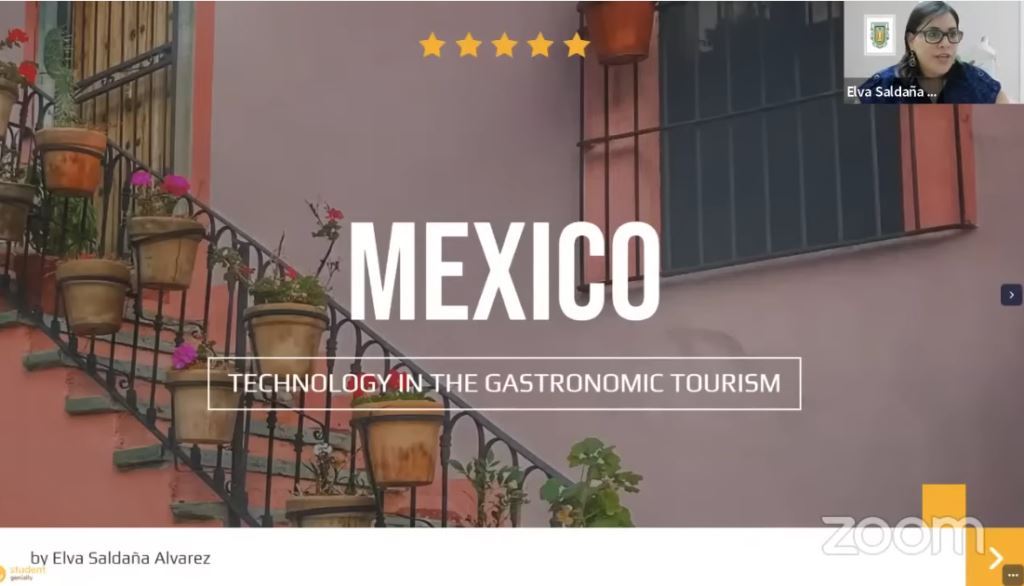
International webinar 2022 – Implementation of local culture in modern technology part 1.
International Webinar
Kembali ke Berita
International Webinar
Senin, 21 November 2022
Priyadi, S.Kom, M.Kom
0 Dilihat