
Next Mr. Wang Tao explained about Theoretical Study: Under the normalization of the epidemic, "Digital Culture Tourist, becomes an important driving force in the development of new industries in China's cultural tourism industry and cultural economy". Areas and Directions of Theoretical Research in this field were also explained by Mr. Wang Tao. China's domestic and foreign universities and research platforms have, over the years, continuously carried out applied economics and scientific research and innovation in digital cultural tourism, intelligent tourism, and digital cultural and creative industries.
Carry out digital rural construction and poverty alleviation work for ethnic western regions in China. Carry out village tourism programs for overall rural revitalization. Sun Yat-sen University has developed the "A Shi Ke Project" and Fujian Normal University has developed the "Xian Yuan Li Project", which echoes the model.
This activity is part of the implementation of STEKOM University's commitment to increase various international activities in order to realize the vision to become an international-class university. Various international activities carried out by STEKOM University continue from year to year. There are international activities that are sustainable and there are also some international activities that are not sustainable. All types of international activities are accommodated and regulated by the International department of STEKOM University.
The title of the presentation delivered by Mr. Wang Tao was "DIGITAL TOURISM - Double Empowerment - Culture and Technology". At the beginning of his presentation, Mr. Wang Tao explained that the integration and innovative development of the digital economy and cultural tourism industry "Digital Culture and Tourism" is a proposition of the times and a call for innovation and strategic ideas for high-quality development. Digital culture and tourism is purposeful, global, trendy, leading and up-to-date.
Mr. Wang Tao further describes the practical application of combining two-way cultural and digital empowerment, theoretically based practical exploration of solutions, developing platforms, product brands, and promoting the transformation of results. The research leads for the first time, we propose principles, ideas, and practical frameworks to build a digital culture travel instant service platform based on the MCN model and sharing economy, and carry out the "innovation plan" implementation stage, start building the platform, and launch preliminary research, planning, marketing, final account forecasting and other business work.
Pour Wang Tao's next presentation featured Wuzi Yuantouzhu. Yuantouzhu is a peninsula located on the northwestern shore of Lake Tai, near Wuxi in the Jiangsu province of China. It was established as a park in 1916 and celebrated its centenary in 2016.
Yuantouzhu, or "Turtle Head Isle" in English (so called because it looks like a turtle's head), is a popular scenic area. Tourist ferries run from Yuantouzhu to the Sanshan Islands, which opened to tourists in the mid-1980s. Seagulls follow boats and love to be fed by tourists on boats.
Yuantouzhu Park is famous for its tourism especially during the spring season from March to April when hundreds of cherry trees start to bloom. Two gates are open to tourists namely the Chongshan gate and the Dushan main gate. During the season, there are at least eight old-fashioned fishing sailboats on the lake.
Digital Cultural Tourism and Smart Tourism Big Data Innovation Center (Wuxi) has integrated scientific research and innovation platforms such as "Smart Tourism Digital Economy Research Institute", we are closely connected with industry, industry and enterprises, implementing "Dual Brain Plan", building a platform co-thinkers between schools and companies, and collaborate with scientific researchers to promote the real implementation of various digital cultural tourism tasks. Such was the explanation from Mr. Wang Tao.
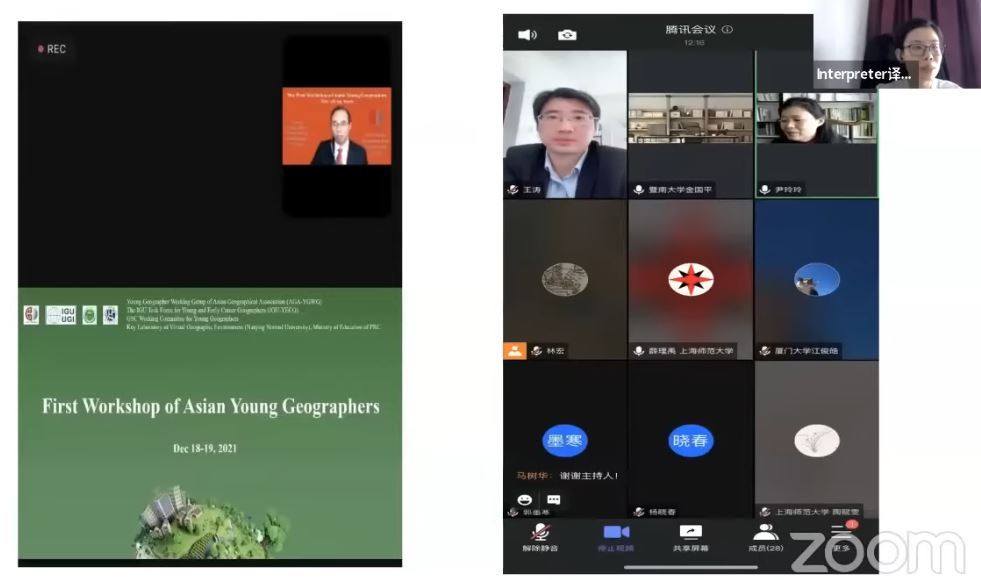
International webinar 2022 – Implementation of local culture in modern technology part 18.
International Webinar
Kembali ke Berita
International Webinar
Senin, 28 November 2022
Priyadi, S.Kom, M.Kom
0 Dilihat