
Next, Mr. Meseret explained about the Stone Carved Church, Lalibela. Rock-Hewn Churches, Lalibela are 11 medieval monolithic cave churches of the 13th century 'New Jerusalem' located in a mountainous area in the heart of Ethiopia near a traditional village with circular dwellings. Lalibela is a high place of Ethiopian worship, to this day it is still a place of pilgrimage and devotion.
The above material was presented at an international webinar held by STEKOM UNIVERSITAS on August 18 2022 by an academic from Debre Tabor University, Ethiopia. The academic's name is Meseret Worku who is a lecturer in the department of history and cultural heritage management. The title of the presentation delivered by Mr. Meseret was "Survey of tangible cultural of Ethiopia". The explanation starts with a fight, then continues with an explanation of the definition of inheritance, and so on.
This activity is part of the implementation of STEKOM University's commitment to increase various international activities in order to realize the vision to become an international-class university. Various international activities carried out by STEKOM University continue from year to year. There are international activities that are sustainable and there are also some international activities that are not sustainable. All types of activities are accommodated internationally and regulated by the International department of STEKOM University.
In a mountainous area in the heart of Ethiopia, about 645 km from Addis Ababa, eleven medieval monolithic churches are carved out of rock. Their building is attributed to King Lalibela who began building the 'New Jerusalem' in the 12th century, after Muslim conquests stopped Christian pilgrimages to the Holy Land. Lalibela thrived after the decline of Aksum's ruin.
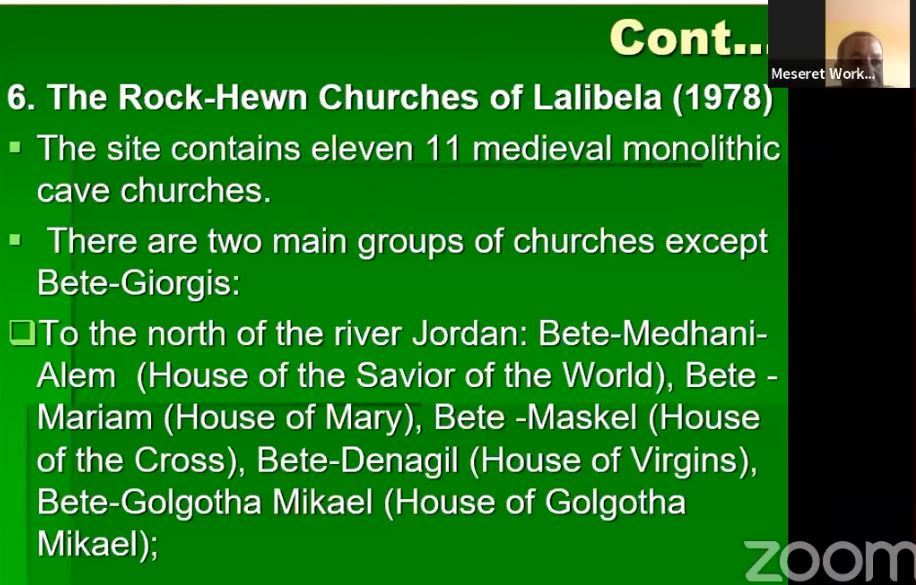
There are two main groups of churches – north of the Jordan: Biete Medhani Alem (House of the Savior of the World), Biete Mariam (House of Mary), Biete Maskal (House of the Cross), Biete Denagel (House of the Virgin), Biete Golgota Mikael (House of Golgotha Mikael) ); and to the south of the river, Biete Amanuel (House of Emmanuel), Biete Qeddus Mercoreus (House of St. Mercoreos), Biete Abba Libanos (House of Abbot of Libanos), Biete Gabriel Raphael (House of Gabriel Raphael), and Biete Lehem (House of the Holy Bread) . The eleventh church, Biete Ghiorgis (St. George's House), is isolated from the others, but connected by a system of moats.
The churches were not built in the traditional way but were hewn out of living rock from monolithic blocks. These beams were further hewn, forming doors, windows, columns, various floors, roofs, etc. This mammoth work was further completed by an extensive system of drainage ditches, moats, and ceremonial passages, some with openings into hermit grottoes and catacombs.
Biete Medhani Alem, with its five aisles, is believed to be the largest monolithic church in the world, while Biete Ghiorgis has an extraordinary cruciform plan. Most may have been used as churches from the start, but Biete Mercoreos and Biete Gabriel Rafael may have been royal residences. Some of the interiors are decorated with mural paintings.
Near the church, the village of Lalibela has two-story round houses, built from local red stone, and known as Tukul Lasta. These extraordinary churches have been the focus of pilgrimage for Coptic Christians since the 12th century.
Criterion (i): The eleven churches represent a unique artistic purpose, in their execution, size and variety and boldness of form.
Criterion (ii): King Lalibela set out to build a symbol of the holy land, when pilgrimage to it became impossible due to historical circumstances. At Biet Golgota Church, there are replicas of the tombs of Christ, and Adam, and the Nativity manger. The holy city of Lalibela became a substitute for the holy sites of Jerusalem and Bethlehem, and thus had a considerable influence on Ethiopian Christianity.
Criterion (iii): The whole of Lalibela offers outstanding testimony to Ethiopia's medieval and post-medieval civilization, including, next to eleven churches, the remains of a traditional two-storey circular village house with interior stairs and thatched roofs.
The drainage ditch filled with soil over several centuries, before being cleared in the 20th century, and has been disturbed by seismic activity. This resulted in the severe degradation of the monuments due to water damage, and most of them are now considered to be in critical condition.
Structural problems have been identified at Biet Amanuel where a risk of collapse could occur, and other locations need to be monitored. Serious degradation of the paintings inside the church has occurred over the last thirty years. Statues and bas-reliefs (such as at the entrance to Biet Mariam) were also badly damaged, and their original features are barely recognizable. All of this threatens the integrity of the property.
Temporary light shelters have now been installed in some churches and this, while offering protection, impacts visual integrity.
Other threats include encroachment on the church grounds by new public and private construction, housing linked to the indigenous village adjacent to the property, and from tourism infrastructure.
Rock-Hewn Churches in Lalibela are still preserved in their natural setting. The association of stone churches and traditional vernacular circular houses, in the surrounding area, still shows evidence of the ancient village layout. The site's original function as a place of pilgrimage has survived and provides evidence of the continuity of social practices. The intangible heritage associated with church practice is still preserved.
For centuries, Church and State have shared responsibility for the sacred site of Lalibela. Home to a large community of priests and monks, it is a residence that attracts large numbers of pilgrims celebrating the major feasts of the Ethiopian Christian calendar. This active and energetic perspective is central to site management.
No specific legal framework is provided to protect the Rock-Hemmed Churches except for a general statute, Proclamation No. 209/2000, which has also established a responsible body, the Cultural Heritage Research and Preservation Authority (ARCCH). With the Ethiopian Church as a partner, ARCCH is represented in Lalibela but the main difficulty is the harmonization of various projects and effective coordination among the partners.
The property is managed under the Lasta district and regional culture and tourism offices. To prevent the property from being impacted by development, a draft proclamation has been prepared but not yet ratified. The management plan has not been established. A four year Conservation Plan was established in 2006 but it has not been fully implemented.
There is a need for stronger planning controls for church arrangements addressing housing, tourism land use and for management plans to be developed that integrate Conservation action plans, and address the overall sustainable development of the area, with involvement from the local population.
International webinar 2022 – Implementation of local culture in modern technology part 9.
International Webinar
Kembali ke Berita
International Webinar
Rabu, 23 November 2022
Priyadi, S.Kom, M.Kom
0 Dilihat