
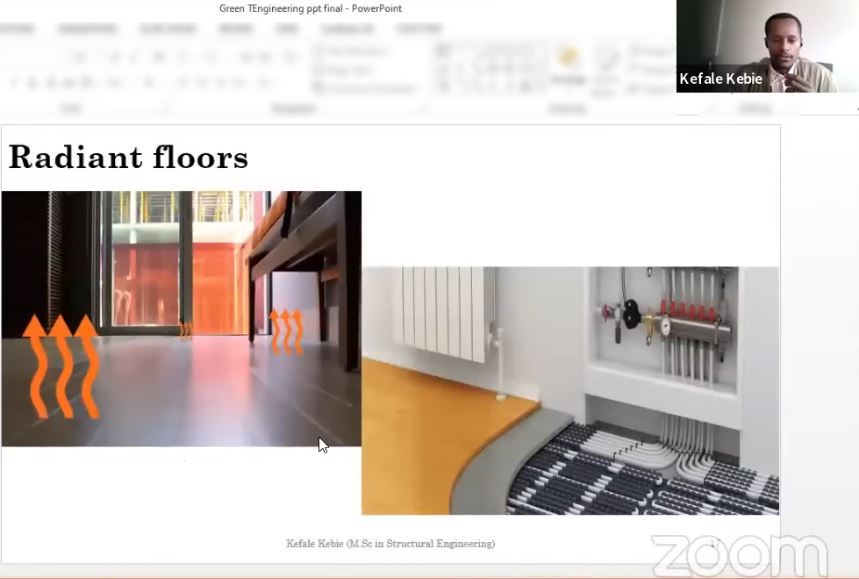
Another green engineered area subject that is no less important than any other is the radiant floor. Heater heating systems transmit heat directly to the floor or to panels in the walls or ceiling of the home. The system relies heavily on radiant heat plating – the direct transfer of heat from hot surfaces to people and objects indoors via infrared radiation. Radiant heating is the effect you feel from the warmth of a hot stove element from across the room. When radiant heating is located on the floor, it is often called radiant floor heating or simply floor heating.
Radiant heating has a number of advantages. This is more efficient than heating baseboards and usually more efficient than heating forced air because it eliminates duct loss. People with allergies often prefer radiant heat because it doesn't distribute the allergen the way forced-air systems do. Hydronic (liquid-based) systems use little electricity, an advantage for homes that are off-grid or in areas with high electricity prices. Hydronic systems can use a variety of energy sources to heat liquids, including standard gas or oil-fired boilers, wood-fired boilers, solar water heaters, or a combination of these sources. For more information on the different types of energy sources and heat distribution systems for home heating, explore Energy Saver 101's infographic on home heating.
Despite its name, radiant floor heating relies heavily on convection, the natural circulation of heat in a room when air warmed by the floor rises. The radiant floor heating system is very different from the radiant panels used in walls and ceilings. For this reason, the following sections discuss radiant heated floors and radiant panels separately.
There are three types of radiant heat floors - radiant air floors (air is the heat carrier medium), electric radiant floors, and hot water (hydronic) floors. For radiant floors, you can categorize this type based on installation. Installations that utilize the large hot mass of concrete slab or lightweight concrete floors over a wooden subfloor are called "wet installations", and installations that "pipe" radiant flooring between two layers of plywood or lay pipe. under a finishing floor or subfloor is called a "dry installation".
The STEKOM University international webinar presenter who delivered the material was Kefale Kebie Bishaw who has an M.Sc academic degree in Structural Engineering. He is also a lecturer and researcher at Debre Tabor University which is located in the city of Debre Tabor, Country of Ethiopia. STEKOM University has collaborated with the University several times. This time the international activity being held was an international webinar entitled "Advantage of Green Engineering".
The title of the presentation delivered by Mr. Kefale was "Advantage of Green Engineering / Technology". At the beginning of his presentation, Mr. Kefale explained the outline of his presentation. The outline presented by Mr. Kefale included the following points:
- What is Green Engineering?
- Green Engineering Category,
- Green Engineering Push Factor Pen,
- Benefits and Some Limitations,
- Conclusions and recommendations.
The webinar activity is part of the implementation of STEKOM University's commitment to increase various international activities in order to realize the vision to become an international-class university. Various international activities carried out by STEKOM University continue from year to year. There are international activities that are sustainable and there are also some international activities that are not sustainable. All types of activities are accommodated internationally and regulated by the International department of STEKOM University.
International Webinar 2022 - The excellence of green engineering part 16
International Webinar
Kembali ke Berita
International Webinar
Senin, 5 Desember 2022
Priyadi, S.Kom, M.Kom
0 Dilihat