
Pakistani academics say that one of the solutions to food insecurity is to work to beat climate change. The factors are fossil fuel power generation, poor manufacturing, deforesting, transportation causing CO2. Pakistan faced 2000 deaths and $15 Billion damage recently due to excessive melting of glaciers and rains.
Climate change has grave consequences for human life and the diversity of our planet's life. Sea levels are rising and oceans are warming. Longer and more intense droughts threaten freshwater supplies and crops, jeopardizing efforts to feed the world's growing population. The livelihoods of farmers, fishermen and foresters, who contribute the least to climate change, suffer the most from extreme weather events that damage infrastructure, wipe out crops, endanger fish stocks, erode natural resources and endanger species. Between 2006 and 2016, agriculture bore the brunt of 26 percent of the total damage and losses caused by climate-related disasters in developing countries.
Without action, climate change will seriously jeopardize food production in countries and regions that are already highly food insecure. This will affect food availability by reducing crop, livestock and fish productivity, and hinder access to food by disrupting the livelihoods of the millions of rural people who depend on agriculture for their income. This will expose the urban and rural poor to higher and more volatile food prices. Inevitably, it will cause migration stress and jeopardize progress towards the Sustainable Development Goals.
This effect is already visible. The 2018 edition of The State of Food Security and Nutrition in the World (SOFI) cites climate change as the main driver behind the sudden increase in the number of hungry people globally – up 17 million to 821 million in 2017.
While no other sector is more vulnerable to extreme and volatile weather events, food and agriculture provide multiple opportunities to adapt, mitigate and build resilience to climate change. Recognizing the commitments countries make to transforming food systems and promoting sustainable agricultural approaches can still achieve a world without hunger and malnutrition by 2030.
Despite accounting for around 24 percent of global greenhouse gas emissions, the agricultural sector – land, forests and oceans – has great potential to offer increased emission efficiency, absolute reductions and carbon sinks, while supporting resilience building and socio-economic development.
The presenter who delivered the material was Abdullah Athar, Senior Lerturer College of Management Science from Pakistan. This material was presented at an international webinar organized by the University of Science & Computer Technology (STEKOM University) in collaboration with the Karachi Institute of Economics & Technology (Pakistan), Universiti Malaysia Perlis (Malaysia), STIE STEKOM, Association of Industrial and Vocational Communities (PERKIVI), Indonesian Smart Teacherpreneur Association (PTIC) and TopLoker.com. The webinar will be held on December 8, 2022 online using zoom media. All scheduled international presenters managed to attend and fill in the material well.
The webinar activity is part of the implementation of STEKOM University's commitment to increase various international activities in order to realize the vision to become an international-class university. Various international activities carried out by STEKOM University continue from year to year. There are international activities that are sustainable and there are also some international activities that are not sustainable. All types of international activities are accommodated and regulated by the International department of STEKOM University.
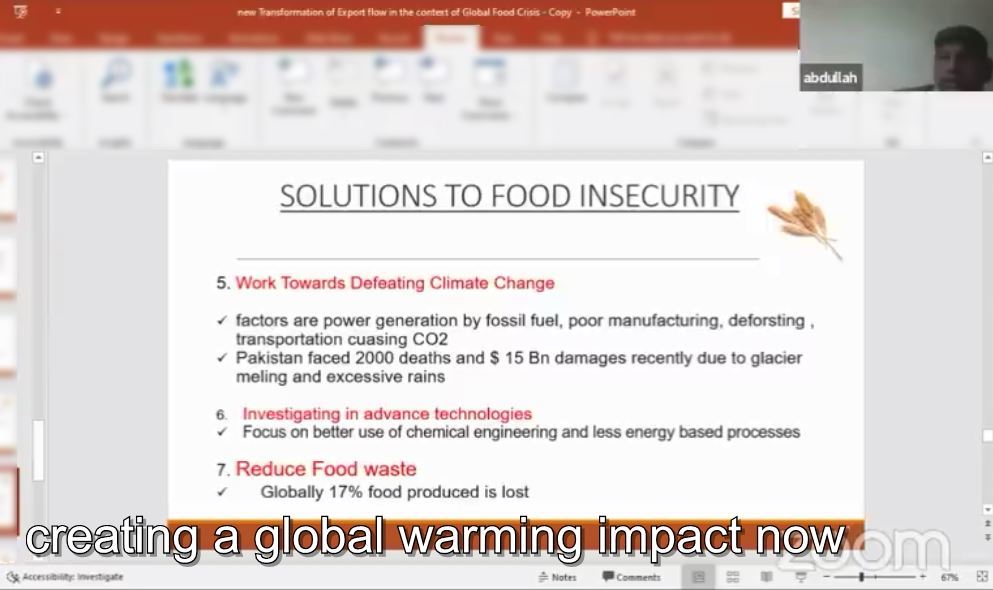
International Webinar 2022 - Transformation of Export Flows in the Context of Global Food Crisis - Part 19
International Webinar
Kembali ke Berita
International Webinar
Rabu, 21 Desember 2022
Priyadi, S.Kom, M.Kom
0 Dilihat