
If previously the brand was part of product management, now some companies are starting to place product development and management as part of brand management. One of the arguments is that a brand is a valuable asset/equity for a company. For this reason, marketing activities must be aimed at strengthening brand equity.
The concept of Consumer-Based Brand Equity (CBBE) was initiated by Kevin Lane Keller. In his book, Strategic Brand Management, Keller stated that this concept takes a brand equity approach based on the perspective of its consumers, individually and as an organization.
The thinking of the CBBE concept is based on the strength of a brand. The power lies in what is in the minds and hearts of customers. According to Keller, the challenge marketers face in building a strong brand is ensuring their customers have the right experience with the product. That experience will then give rise to feelings, thoughts, beliefs, perceptions and opinions about the brand, good or bad.
Positive CBBE resulting from good experiences will benefit the company. For example, customers are more receptive to product extensions from a brand, are more insensitive to price increases, and take the initiative to find new ways to get products in new distribution channels.
One way to create a positive CBBE is a strong brand. In building a strong brand, there are four steps that must be taken. Each of these steps represents the following questions:
Who are you? (brand identity)
What are you? (brand meaning)
what about you? What do I think or feel about you? (response to brands)
What about you and me? What kind of association and how much of a connection would I like to have with you? (relationship with brands)
The four questions are displayed in a pyramid model of Brand Resonance or Brand Resonance. This pyramid model describes a way to create active and intense loyalty relationships from customers to brands.
This model also considers the role of brand positioning on what customers think, feel and do and the extent to which they are connected to the brand. Every implication created in this model will affect the strength of the brand in the formation of brand equity or value.
A strong brand is ultimately a brand that the customer is really attached to. As a result, customers will become 'missionaries' in sharing their beliefs and spreading the word about the brand.
Who doesn't want to have a brand like that? There are definitely obstacles in building a strong brand. Building alone is already difficult, especially when faced with the challenges of the current economic conditions. Through his theories, Keller can provide solutions to marketers' biggest problems.
The material above was presented by a presenter from Pakistan in an international webinar held by STEKOM University in collaboration with Universities from Pakistan, Malaysia, and various other parties. The name of the presenter is Dr. Amena Sibghatullah who is an assistant professor and head of marketing college of management science, KIET University, Pakistan.
This international webinar activity is part of the implementation of STEKOM University's commitment to increase various international activities. This was done in order to realize the vision to become an international-class university. Various international activities carried out by STEKOM University continue from year to year. There are international activities that are sustainable and there are also some international activities that are not sustainable. All types of international activities are accommodated and regulated by the International department of STEKOM University.
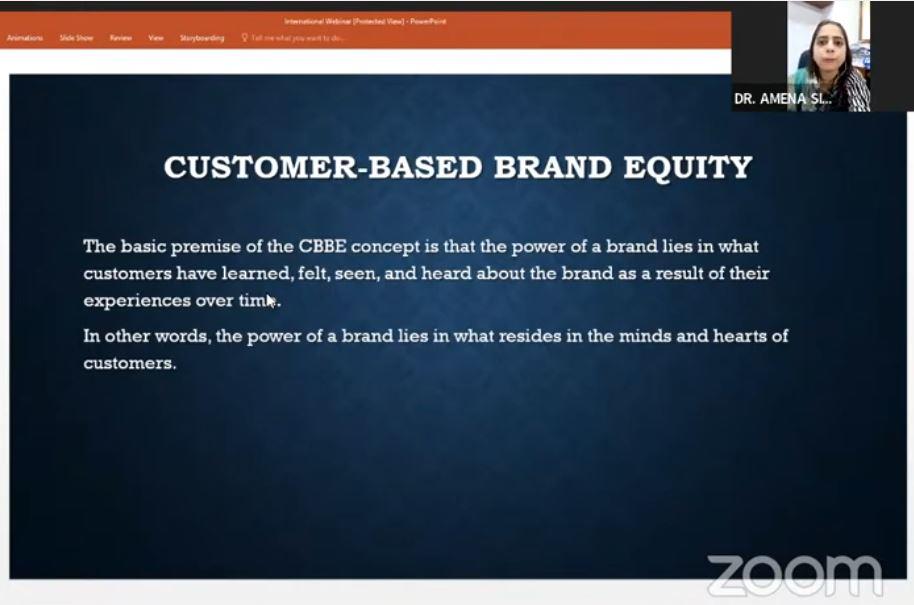
International Webinar 2023 - The Role of Digital Based Innovative to Improve Competitiveness – Part 18
International Webinar
Kembali ke Berita
International Webinar
Kamis, 9 Februari 2023
Priyadi, S.Kom, M.Kom
0 Dilihat