
Systems administration is a field of work in which a person manages one or more systems, be it software, hardware, servers or workstations. The goal is to ensure the system runs efficiently and effectively.
System administration is usually performed by information technology experts for or within an organization. Their job is to ensure that all computer related systems and services keep functioning. A system administrator, or sysadmin, is a person responsible for maintaining and operating a computer system or network for a company or other organization. Systems administrators are often members of the information technology department.
The duties of a systems administrator are broad, and vary from organization to organization. System administrators are typically tasked with installing, supporting, and maintaining servers or other computer systems, and planning for and responding to service outages and other problems. Other duties may include scripting or light programming, project management for systems-related projects, supervising or training computer operators, and being the equivalent of a repairman for computer problems beyond the know-how of technical support staff.
It is common for system administrators and system analysts who develop and maintain computer processes to identify operational and development systems. This is done to provide maximum reliability and availability on mission-critical systems used in organizational processes by typical users to complete routine work while providing development resources to computer process development or research teams augmenting existing processes or developing new processes for the organization.
Many other work staff organizations related to systems administration. In larger companies these may all be separate positions within the computer support or Information Services (IS) department. In smaller groups they can be shared by multiple sysadmins, or even one person.
- A database administrator (DBA) maintains database systems, and is responsible for data integrity and system efficiency and performance.
- Network administrators maintain network infrastructure such as switches and routers, and diagnose problems with these or with the behavior of computers connected to the network.
- A security administrator is a specialist in computer and network security, including the administration of security devices such as firewalls, as well as consulting on general security measures.
- Technical support staff responds to individual users' difficulties with computer systems, providing instructions and sometimes training, and diagnosing and solving common problems.
- Computer operators perform routine maintenance and maintenance, such as replacing backup tapes or replacing failed drives in a RAID array. Such tasks usually require a physical presence in the room with the computer; and although the job of a less skilled sysadmin requires the same level of trust, because operators have access to potentially sensitive data.
- A systems analyst documents, troubleshoots, and develops existing and new computers and work processes and systems.
In some organizations, an individual may start as a technical support staff member or computer operator, then gain work experience to be promoted to a sysadmin position and then to IT Manager.
The above material was presented by a presenter from Malaysia in an international webinar held by STEKOM University in collaboration with Universities from Pakistan, Malaysia, and various other parties. The name of the presenter is Dr. Farahida Mohd who is an assistant professor at a University in Malaysia.
This international webinar activity is part of the implementation of STEKOM University's commitment to increase various international activities. This was done in order to realize the vision to become an international-class university. Various international activities carried out by STEKOM University continue from year to year. There are international activities that are sustainable and there are also some international activities that are not sustainable. All types of international activities are accommodated and regulated by the International department of STEKOM University.
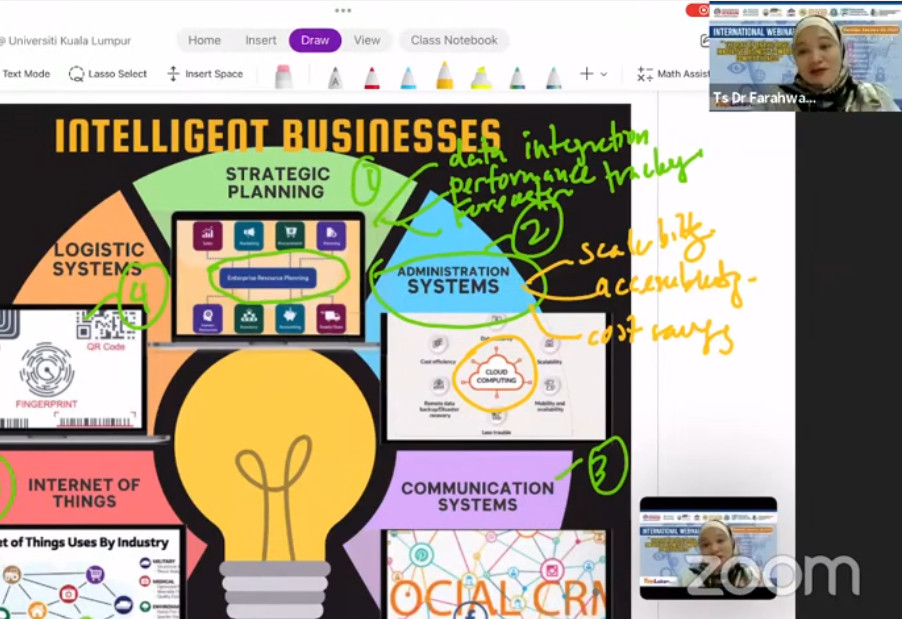
International Webinar 2023 - The Role of Digital Based Innovative to Improve Competitiveness – Part 22
International Webinar
Kembali ke Berita
International Webinar
Minggu, 12 Februari 2023
Priyadi, S.Kom, M.Kom
0 Dilihat