
The automotive industry is experiencing a revolutionary transformation with the advent of the Internet of Things (IoT). IoT is the seamless integration of Operational Technology (OT) and Information Technology (IT), effectively bridging the gap between the physical and digital worlds. By bringing people, processes, and products together, IoT has proven to be a game-changer in making informed decisions, optimizing operational efficiency, and revolutionizing the automotive landscape.
At its core, IoT relies on a network of interconnected devices equipped with sensors that can collect and transmit data, both analog and digital. This vast network of IoT sensors forms the foundation for gathering real-time insights and actionable information, which can significantly improve decision-making processes.
One of the key strengths of IoT in the automotive sector is its ability to employ advanced analytics algorithms. By processing the vast amounts of data collected from IoT sensors, manufacturers can gain valuable insights into their operations, identify patterns, and uncover opportunities for improvement. This analytical approach enables automotive companies to enhance their operational efficiency, streamline processes, and deliver superior products to consumers.
Two prominent application features of IoT in the automotive industry are predictive analytics and remote diagnostics. Predictive analytics leverages historical data, real-time information, and machine learning algorithms to predict potential equipment failures and maintenance requirements accurately. By implementing predictive maintenance, manufacturers can track their assets' health, reduce downtime, and save on maintenance costs.
Remote diagnostics is another crucial aspect of IoT implementation. With IoT-enabled sensors, vehicles can constantly monitor their performance and detect anomalies in real-time. This information is then relayed back to the manufacturers, who can remotely diagnose the issues and provide prompt solutions. This proactive approach not only reduces repair time but also enhances vehicle reliability, ensuring a better experience for customers.
Let's explore some essential use cases of IoT in the automotive industry:
- Predictive Maintenance: By tracking the health of critical equipment, automotive manufacturers can anticipate maintenance needs and prevent unexpected breakdowns, reducing operational downtime and saving costs.
- Data Analysis in Production and Supply Chain: IoT allows companies to gather and analyze data from various stages of production and the supply chain. This data-driven approach enhances supply chain management, minimizes waste, and optimizes inventory levels.
- Remote Monitoring and Control: Leveraging cloud platforms such as AWS and Azure IoT, automotive manufacturers can remotely monitor vehicle performance, deploy software updates, and even automate certain functions, leading to enhanced customer satisfaction and improved operational control.
- Enhanced Safety and Customer Experience: IoT-powered sensors in vehicles can gather data on driving behavior, road conditions, and potential hazards. This information can be utilized to develop advanced driver assistance systems (ADAS) and improve overall road safety.
- Efficient Fleet Management: IoT-enabled solutions enable fleet managers to monitor vehicle location, fuel consumption, and maintenance needs in real-time, optimizing route planning and reducing operational costs.
As the automotive industry continues to embrace IoT, it's crucial for manufacturers to invest in robust security measures. Protecting the vast amount of data exchanged within the IoT ecosystem is paramount to prevent potential cybersecurity threats and maintain customer trust.
In conclusion, the integration of IoT in the automotive industry is revolutionizing the way manufacturers operate, empowering them with data-driven insights and enabling more efficient and safer vehicles. With the power of IoT, the automotive sector is well on its way to a smarter, more connected future.
The above material was delivered by a presenter from Ukraine in an international webinar held by STEKOM University in collaboration with Kuala Lumpur University from Malaysia and Ukraine. The presenter's name is Omelianenko Vitalii. He is a Doctor of Economics as well as Associate Professor and head of the center for technology projects at Summy Makarenko State University. The international webinar was held on May 23 2023 which was hosted by Ms. Novita. The media used in the international seminar is zoom and broadcast directly to Youtube. The event went very well and was quite lively, marked by the many participants who took part and the number of questions asked after the presenters finished delivering their presentations.
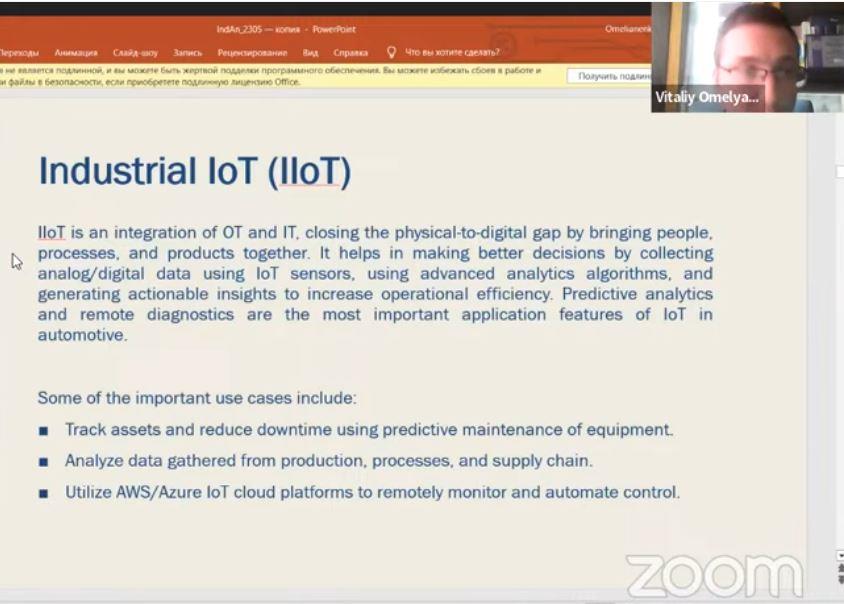
International Webinar - Industrial Analytics Driving Digital Information – part 11
International Webinar
Kembali ke Berita
International Webinar
Kamis, 27 Juli 2023
Priyadi, S.Kom, M.Kom
0 Dilihat