
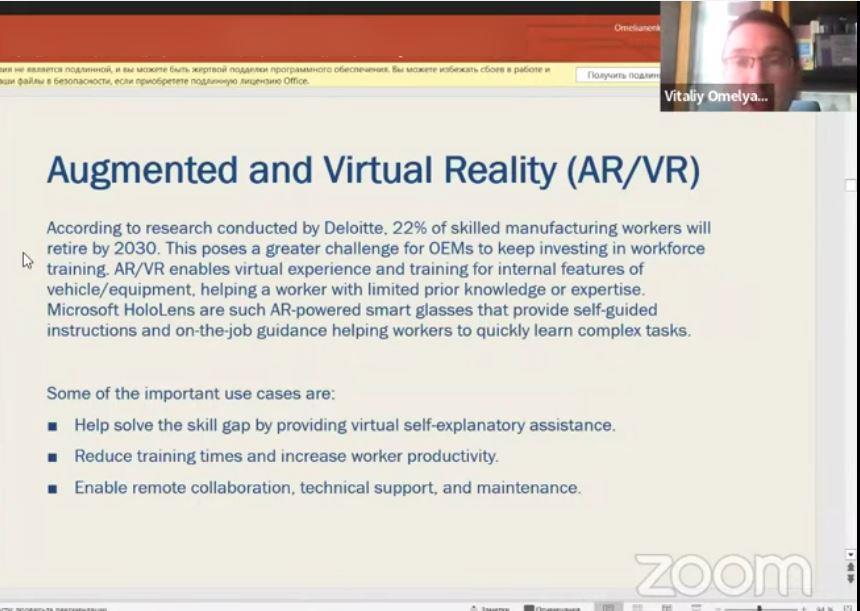
As the manufacturing industry faces a looming challenge with a significant portion of its skilled workforce set to retire by 2030, innovative technologies are stepping in to bridge the impending skill gap. According to research conducted by Deloitte, approximately 22% of skilled manufacturing workers are expected to retire within the next decade. This impending talent shortage presents a pressing challenge for Original Equipment Manufacturers (OEMs), underscoring the urgent need for investing in workforce training and development. In this scenario, Augmented Reality (AR) and Virtual Reality (VR) are emerging as powerful tools to equip the next generation of workers with the necessary skills.
AR and VR technologies have taken significant strides in recent years, finding application across various industries. In manufacturing, they offer a transformative solution to the challenges posed by a retiring workforce. One remarkable application is in providing virtual experiences and training for the internal features of vehicles and equipment. This innovation is particularly beneficial for workers who possess limited prior knowledge or expertise.
Among the pioneering products in this realm are Microsoft HoloLens, which represents a pinnacle of AR-powered smart glasses. These devices offer self-guided instructions and on-the-job guidance, allowing workers to swiftly grasp complex tasks. The technology overlays digital information onto the real-world environment, creating an interactive and immersive training experience. For instance, a worker tasked with a complex assembly process can wear the HoloLens and receive step-by-step visual instructions, reducing the learning curve and minimizing the risk of errors.
Several compelling use cases highlight the potential of AR/VR in addressing the challenges posed by the skill gap in manufacturing:
- Virtual Self-Explanatory Assistance: AR/VR technology provides workers with virtual, self-explanatory assistance, reducing the dependency on experienced personnel. New employees can access detailed visual instructions and information, enabling them to comprehend intricate processes efficiently.
- Reduced Training Times and Enhanced Productivity: Traditional training methods often require substantial time investments. AR/VR streamlines this process by offering interactive and engaging training modules. This not only reduces training times but also enhances worker productivity as they acquire hands-on experience through simulated scenarios.
- Remote Collaboration and Technical Support: AR/VR facilitates remote collaboration by enabling experts to provide real-time guidance and support to workers in different locations. This capability is particularly valuable in scenarios where immediate, on-site assistance is not feasible.
- Maintenance and Troubleshooting: The technology empowers workers to perform maintenance tasks and troubleshoot issues effectively. By superimposing digital annotations onto physical equipment, AR/VR guides technicians through complex repair procedures, minimizing downtime.
In conclusion, AR/VR technologies hold immense promise in revolutionizing workforce training within the manufacturing sector. As a significant percentage of skilled manufacturing workers approach retirement, these technologies offer a forward-looking solution to address the impending skill gap. Microsoft HoloLens and similar innovations provide a glimpse into the future of training, where virtual experiences and interactive guidance become integral to the learning process. By reducing training times, enhancing productivity, enabling remote collaboration, and simplifying maintenance procedures, AR/VR contribute to a more agile, skilled, and competitive workforce ready to tackle the challenges of tomorrow's manufacturing landscape.
The above material was delivered by a presenter from Ukraine in an international webinar held by STEKOM University in collaboration with Kuala Lumpur University from Malaysia and Ukraine. The presenter's name is Omelianenko Vitalii. He is a Doctor of Economics as well as Associate Professor and head of the center for technology projects at Summy Makarenko State University. The international webinar was held on May 23 2023 which was hosted by Ms. Novita. The media used in the international seminar is zoom and broadcast directly to Youtube. The event went very well and was quite lively, marked by the many participants who took part and the number of questions asked after the presenters finished delivering their presentations.
This international webinar activity is part of the implementation of STEKOM University's commitment to increase various international activities. This was done in order to realize the vision to become an international-class university. Various international activities carried out by STEKOM University continue from year to year. There are international activities that are sustainable and there are also some international activities that are not sustainable. All types of activities are accommodated internationally and regulated by the International department of STEKOM University.
International Webinar - Industrial Analytics Driving Digital Information – part 13
International Webinar
Kembali ke Berita
International Webinar
Kamis, 3 Agustus 2023
Priyadi, S.Kom, M.Kom
0 Dilihat