
An intelligent tutoring system (ITS) is a computer system whose aim is to provide direct and customized instructions or feedback to learners, usually without requiring intervention from a human teacher. ITS has the common goal of enabling learning in a meaningful and effective way using various processing technologies. There are many examples of ITS being used in formal education and professional settings where they have demonstrated their capabilities and limitations. There is a close relationship between intelligent tutors, cognitive learning theory and design; and there is ongoing research to increase the effectiveness of ITS. An ITS typically aims to replicate the demonstrated benefits of one-to-one personal tutoring, in contexts where students would otherwise have access to one-to-many instruction from one teacher (e.g. lectures in a class), or no teacher at all. . (eg, online homework). ITS are often designed with the aim of providing access to high-quality education for every student.
Intelligent machine events have been abused for centuries. Blaise Pascal created the first calculating machine capable of performing mathematical functions in the 17th century called the Pascal Calculator. At that time the mathematician and philosopher Gottfried Wilhelm Leibniz envisioned machines capable of reasoning and applying logical rules to solve demands. These early works inspired later developments.
The concept of intelligent machines for instructional use dates back to 1924, when Sidney Pressey of Ohio State University created mechanically-generated machines to teach students without human teachers. The machine was very much like a typewriter with a few buttons and a window that asked students questions. The Pressey machine allows user input and provides immediate feedback by recording their score on the counter.
Pressey was influenced by Edward L. Thorndike, a learning theorist and educational psychologist at Columbia University Teachers' College in the late 19th and early 20th centuries. Thorndike put forward the law to maximize learning. Thorndike's laws include the law of effect, the law of practice, and the law of recency. By later standards, Pressey's teaching and testing machine would not be considered intelligent as it is mechanically run and based on one question and answer at a time, but it set an early precedent for future projects.
In the 1950s and 1960s, new perspectives on learning emerged. Burrhus Frederic "B.F." Skinner at Harvard University disagreed with Thorndike's connectionism learning theory or Pressey's machine teaching. In contrast, Skinner was a behaviorist who believed that students should structure their answers and not rely on recognition. He also built a teaching machine with a mechanical upgrade system that would reward students for correct responses to questions.
The material above was delivered by a presenter from Ukraine in an International Visiting Lecturer held by STEKOM University in collaboration with Universities from Ukraine. The presenter's name is Oleksii Panasenko. He is Lecturer at Vinnitsia State Pedagogical University (Ukraine), Ph.D. in Mathematics. He is also a data scientist at NestLogic Inc. His interest in science is in mathematics: fractal analysis. Meanwhile, her interest in teaching is working with mathematically gifted students; Math Olympiad. In addition he has an interest in all things related to machine learning, data science, AI. The time for carrying out the lecture visitation is on May 12 2023 with an initial remark by Dr. Joseph Teguh Santoso who is the chancellor of STEKOM university and guided by Mrs. Novita.
This international webinar activity is part of the implementation of STEKOM University's commitment to increase various international activities. This was done in order to realize the vision to become an international-class university. Various international activities carried out by STEKOM University continue from year to year. There are international activities that are sustainable and there are also some international activities that are not sustainable. All types of activities are accommodated internationally and regulated by the International department of STEKOM University.
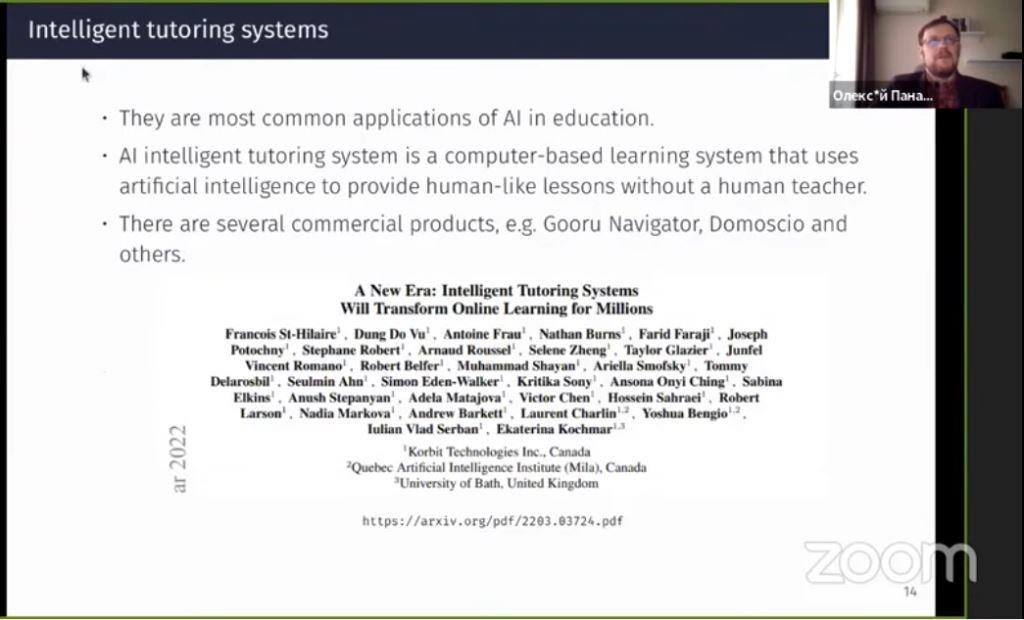
Visiting lecture with Faculties from Vinnytsia Pedagogical University (Ukraine) Part 7
Visiting Lecturer
Kembali ke Berita
Visiting Lecturer
Rabu, 14 Juni 2023
Priyadi, S.Kom, M.Kom
0 Dilihat