
The International Presenter from Singapore gave an explanation about business in the face of slowing global economic growth. As coronavirus-weary nations enter the third year of the pandemic, global growth is expected to slow sharply. Against this difficult backdrop, a range of economic challenges are mounting for emerging markets and developing economies (EMDEs)—including the continuing COVID-19 outbreak, high inflation, record debt levels, and rising income inequality.
The latest Global Economic Prospects Report predicts that global growth will slow from 5.5 percent in 2021 to 4.1 percent in 2022 and 3.2 percent in 2023 as pent-up demand dissipates and as fiscal and monetary supports are scrapped around the world . The rapid spread of the Omicron variant also indicates that the pandemic is likely to continue to disrupt economic activity in the near future. Among developing countries, growth is forecast to fall from 6.3 percent in 2021 to 4.6 percent in 2022 and 4.4 percent in 2023.
The prospect poses a particular danger to EMDE. First, a marked slowdown in the major economies—including the United States and China—will reduce external demand for goods and services for many developing countries. Moreover, the slowdown comes just as governments in many of these countries are running out of policy space to respond, if necessary, to emerging challenges: new COVID-19 outbreaks, persistent supply chain bottlenecks and inflationary pressures, and increasing financial vulnerabilities in large swaths of the world. . The combination of these threats can increase the risk of hard landings in these countries.
To strengthen the global recovery, comprehensive policies are needed—along with aggressive global cooperation on vaccination, debt and climate to drive a green, resilient and inclusive recovery.
Policymakers can prioritize spending on projects that boost long-term growth prospects, including those that help narrow the sizable investment gap. Stronger domestic revenue mobilization could help replenish fiscal buffers that have been drained by the pandemic-related drop in revenue. It can also support increased public spending.
A comprehensive approach is also needed to reverse the surge in global inequality caused by COVID. The first step is to accelerate the global rollout of vaccinations in EMDE, said the report. But productivity-enhancing reforms are needed to increase per capita income. To prevent the pandemic-induced increase in inequality from taking root, fiscal support measures must focus on the most vulnerable segments of the population.
Many of these policy recommendations will require significant fiscal resources to implement—not easy in an era of record high debt. That means stronger global cooperation will be needed to expand the fiscal resources available to low-income developing economies. It also means strengthening rules-based global trade and facilitating an investment climate that promotes faster productivity growth.
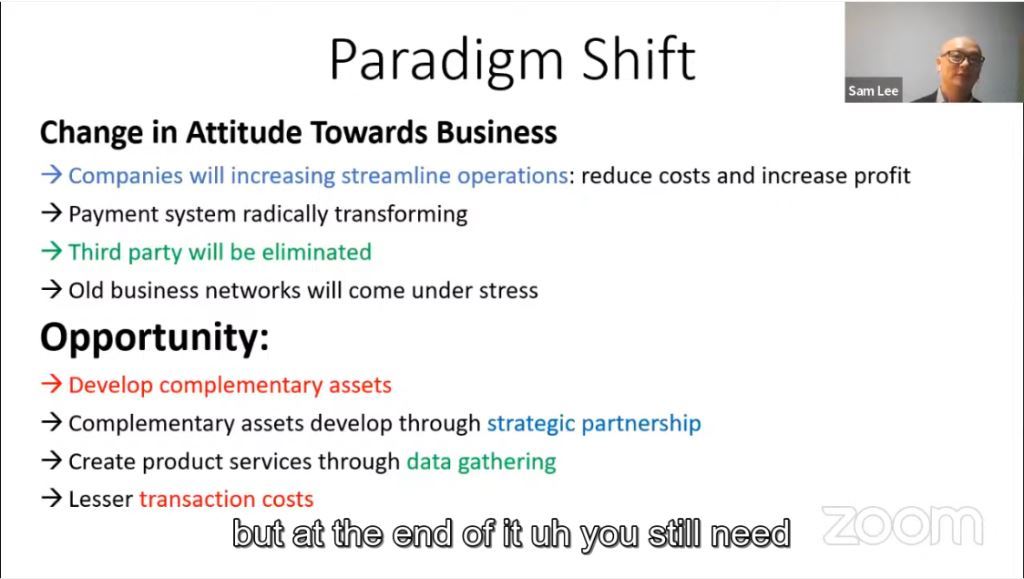
This material was presented by a presenter from Singapore in an international webinar entitled "Paradigm Shift - The World is Changing - Opportunity and Challenges - Challenges: Slow Global Growth - Opportunity: Greater Regional Cooperation" held by STEKOM University in collaboration with Universiti Perlis Malaysia, Singapore University of social science, PTIC and various other parties. The presenter's name from Singapore is Lee Khuay Khiang who is a lecturer at STEKOM University.
This international webinar activity is part of the implementation of STEKOM University's commitment to increase various international activities. This was done in order to realize the vision to become an international-class university. Various international activities carried out by STEKOM University continue from year to year. There are international activities that are sustainable and there are also some international activities that are not sustainable. All types of international activities are accommodated and regulated by the International department of STEKOM University.
International Webinar 2022 - Business culture, how to step forward - part 12
International Webinar
Back to News
International Webinar
Monday, January 9, 2023
Priyadi, S.Kom, M.Kom
0 Views