
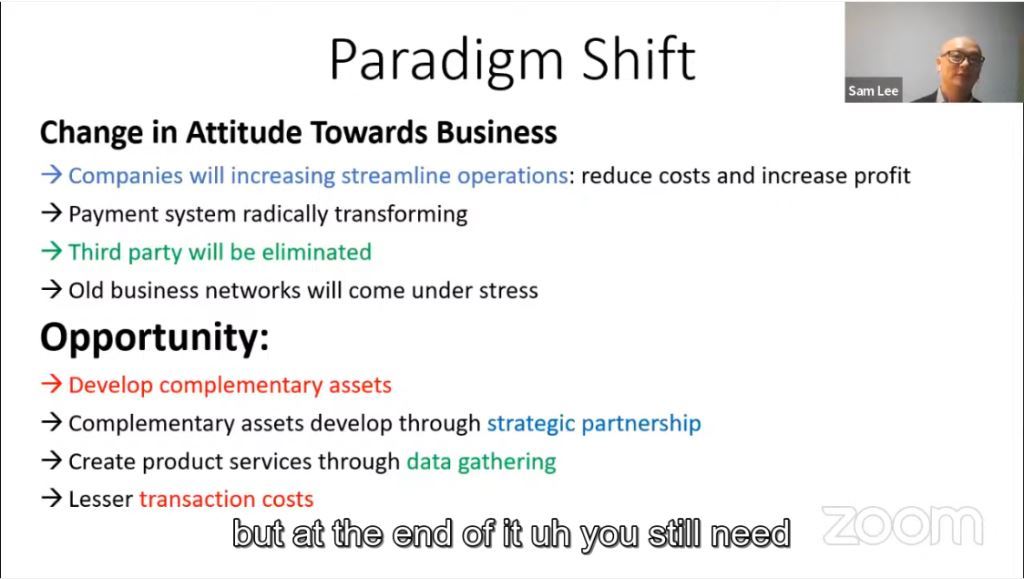
Slowing global economic growth not only brings challenges but also opportunities, according to a presenter from Singapore. This condition can provide opportunities to develop complementary assets. These complementary assets can develop through strategic partnerships. In addition, businesses can create product services through data collection. Transaction costs are also lower in these conditions of slowing global economic growth.
Using data to build a marketing strategy is very important, because it can increase revenue and a stable business. Having data can also make it easier for you to plan business strategies.
You can use data in any business, at any stage or size. Use of data can be made from websites, points of sale, and other data analysis. You can use the results of data analysis to develop and implement better advertising and marketing.
More and more businesses are using data and analytics to provide better service and an enhanced customer experience. Data enables businesses to create policy-based predictive analytics to identify clients and provide personalized services and offers.
Customer data can come from many places, such as website analytics, advertising platforms, customer demographics, social media profiles, surveys, and historical and geographic data. From this, you can identify something that is relevant to your business, create policies and create special advertisements that can help drive your company's revenue with the right marketing strategy.
For businesses where traffic is key, such as shops, coffee shops, cafes and restaurants, we recommend paying attention to the finer points of your customer data. Here are some data bullet points you can use:
Visit frequency:
- How often do customers come? What frequency is ideal for your revenue goal?
- Dwell time: How much time do visitors spend on your business? What is the ideal length of visit in terms of brand and customer engagement to drive revenue and customer loyalty?
- Demographics and psychographics: Know who your target market is based on their age range, gender, profession, income, interests, intentions and likes.
- Traffic monitoring: What are the peak hours inside and outside the store, and how can your business benefit from this information? What messages can you post on or offsite to attract people and increase sales?
- Sentiment analysis: Information about customer sentiment towards the products and services offered by the business. This can include customers posting likes/dislikes, reviews, ratings and feedback on social media sites and other platforms. Analyzing sentiment data helps you understand if customers feel positive, negative or neutral about your business.
- Effective promotion: Display digital messages on monitors or send digital coupons to customers on mobile devices when they enter a business or pass a business.
- Manage staff and resources: Do you have the right staffing levels for the busy time?
- Loyalty and rewards using digital solutions: Create programs that instantly recognize loyal customers and reward these customers, and monitor their buying habits and recommendations, and their engagement with your brand online.
This material was presented by a presenter from Singapore in an international webinar entitled "Paradigm Shift - The World is Changing - Opportunity and Challenges - Challenges: Slow Global Growth - Opportunity: Greater Regional Cooperation" held by STEKOM University in collaboration with Universiti Perlis Malaysia, Singapore University of social science, PTIC and various other parties. The presenter's name from Singapore is Lee Khuay Khiang who is a lecturer at STEKOM University.
This international webinar activity is part of the implementation of STEKOM University's commitment to increase various international activities. This was done in order to realize the vision to become an international-class university. Various international activities carried out by STEKOM University continue from year to year. There are international activities that are sustainable and there are also some international activities that are not sustainable. All types of international activities are accommodated and regulated by the International department of STEKOM University.
International Webinar 2022 - Business culture, how to step forward - part 14
International Webinar
Back to News
International Webinar
Monday, January 9, 2023
Priyadi, S.Kom, M.Kom
0 Views