
Academics from Malaysia say that one way to move forward in modern business culture is to embrace technology. Humans have invented technology to help themselves and each other for centuries. While we often refer to technology as a shiny new innovation like self-driving cars or voice assistants, it goes beyond that. Technology also includes things that are so embedded in our everyday lives that we have stopped thinking of them as technological innovations—things like language, clothing, and housing.
Despite technology's pivotal role in human history, our response to breakthroughs is often tentative because we fear the potential harm. But the world doesn't stop for anyone. As the past has shown, each of these technological breakthroughs presents other opportunities to improve people's lives, and we need to embrace each of them.
Between 2000 and 2017, the number of internet users grew 10 times—from 360 million to 3.6 billion people. This massive online migration has led to an explosion of economic opportunities around the world.
Something as basic as an internet connection can mean opportunities for higher education, new jobs, or upskilling. In India, for example, every month more than 8 million people use Google's public Wi-Fi program, Google Station, to go online and access job training materials or educational resources. Shrinath, a train porter in Kerala, used the free, high-speed Wi-Fi at a public transport station to study and eventually pass the Kerala civil service entrance exam—a feat that would have been much more difficult had Shrinath not used the internet.
It also opens up opportunities for businesses big and small. With access to online platforms, companies have more ways to reach customers and grow. And every business can benefit from digital tools, even the most traditional ones. Hai Sia, a 40-year-old family-run seafood wholesaler in Singapore, for example, is mostly a one-on-one business in a bustling fish market. Today, they have reached new customers with digital advertising and other digital tools such as YouTube videos showcasing the company's work.
Technology isn't just about digitizing existing businesses—it's also creating new types of entrepreneurs and industries. Check out the creators of YouTube, running businesses that were born on online platforms and couldn't have existed before the internet. GO-JEK, a startup that started as a motorcycle taxi company in Indonesia, has facilitated the emergence of a new type of business with its food delivery service: allowing home cooks to become restaurant owners. Freed from the costly requirements of renting restaurant space and hiring staff, people can run profitable businesses right from their kitchens at home.
Every major change in technology has changed the way we live and work. In the early 1980s, the PC revolution made computers a part of human life and changed the way we work. In the 1990s, the internet changed the way we find information and opened up new economic opportunities. Then, in the mid-2000s, smartphones brought all that knowledge into our pockets. Now AI is the next frontier.
What excites me most about the shift to AI and machine learning is seeing what the younger generation is doing with these technologies. Teenagers are using AI to create programs that more accurately identify plant diseases and even detect breast cancer. If our children can use technology to preserve the environment and fight cancer, imagine what we humans can do if they use AI as one of the tools to improve people's lives.
As we continue to explore what benefits AI can provide, we need to lean into these changes rather than avoid them. After all, the world would be a very different and much poorer place today if our ancestors had succumbed to fire or language or the wheel. The reaction to technology we don't know how to use well is not to stop innovating. The right reaction is to work harder and innovate even better so we can make technology work for everyone.
This material was delivered by a presenter from Malaysia in an international webinar entitled "Business culture: how to step forward" which was held by STEKOM University in collaboration with Universiti Perlis Malaysia, Singapore University of social science, PTIC and various other parties. The name of the presenter from Malaysia is DR MOSD SHAHIDAN SHAARI who is a lecturer at the Faculty of Applied and Human Science Universiti Malaysia Perlis.
This international webinar activity is part of the implementation of STEKOM University's commitment to increase various international activities. This was done in order to realize the vision to become an international-class university. Various international activities carried out by STEKOM University continue from year to year. There are international activities that are sustainable and there are also some international activities that are not sustainable. All types of international activities are accommodated and regulated by the International department of STEKOM University.
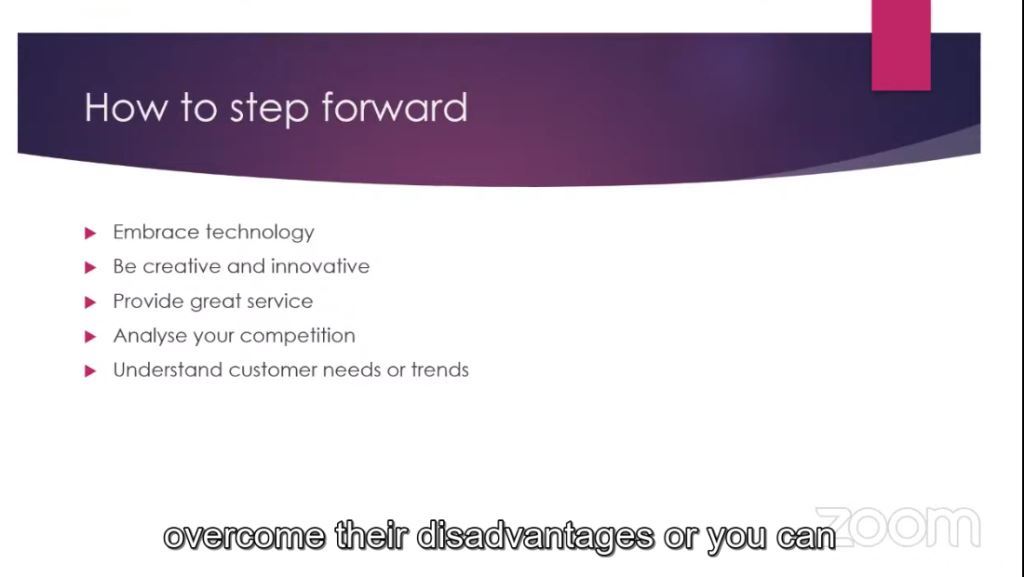
International Webinar 2022 - Business culture, how to step forward - part 3
International Webinar
Back to News
International Webinar
Tuesday, January 3, 2023
Priyadi, S.Kom, M.Kom
0 Views