
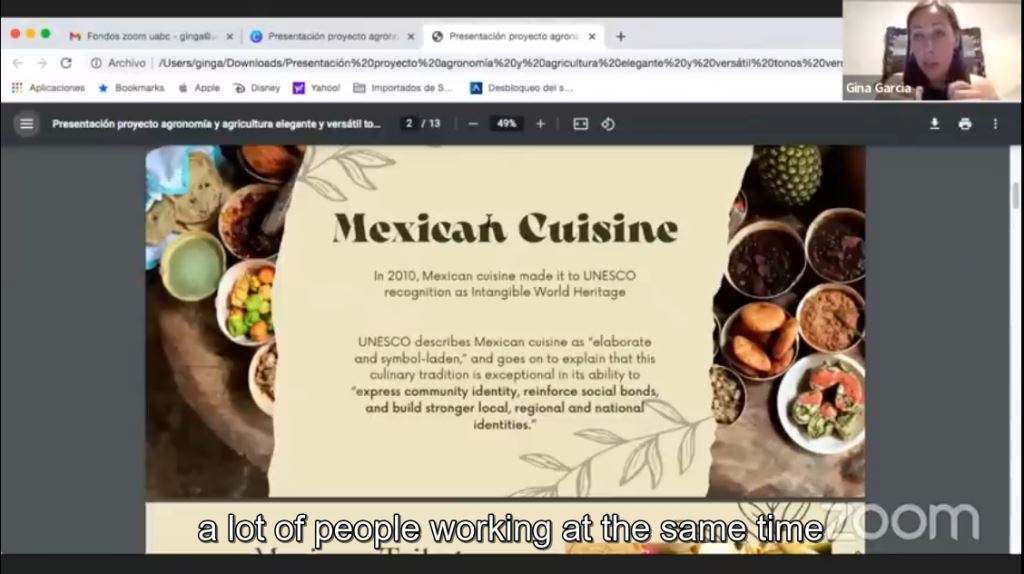
Academics from Mexico present Mexican cuisine in an international webinar held with STEKOM University. Mexican cuisine consists of modern Mexican country cooking and traditions. Its earliest roots lie in Mesoamerican cuisine. The materials and methods began with the first farming communities such as the Olmec and Mayan who raised maize, created a standardized process of nixtamalization of maize, and established their way of eating. Successive waves of other Mesoamerican groups brought with them their own cooking methods. These include: Teotihuacanos, Toltec, Huastec, Zapotec, Mixtec, Otomi, Purépecha, Totonac, Mazatec, Mazahua, and Nahua. With the formation of the Mexica of the multi-ethnic Triple Alliance (Aztec Empire), culinary delights became pervasive (Aztec cuisine).
Today's staple foods that come from the land include corn (maize), turkey, beans, squash, spinach, chia, avocado, tomatoes, tomatillos, cocoa, vanilla, agave, spirulina, sweet potatoes, cactus, and chili peppers. Its centuries-long history has produced regional cuisines based on local conditions, including Baja Med, Chiapas, Veracruz, Oaxacan, and New Mexican and Tex-Mex American cuisine.
After the Spanish conquest of the Aztec Empire and throughout Mesoamerica, the Spanish introduced a number of other foods, the most important of which were meat from domestic animals (cows, pigs, chickens, goats and sheep), dairy products (especially cheese). and milk), rice, sugar, olive oil and various fruits and vegetables. Various cooking styles and recipes were also introduced from Spain both during the colonial period and by Spanish immigrants who kept arriving after independence. The Spanish influence on Mexican cuisine is also evident in its sweets such as: alfajores, alfeniques, borrachitos and churros. Asian and African influences were also introduced during this era as a result of African slavery in New Spain and the Manila-Acapulco Galleon.
Mexican cuisine is an important aspect of Mexican popular culture, social structure and traditions. The most important example of this relationship is the use of moles for special occasions and holidays, particularly in the South and Central regions of the country. For these and other reasons, traditional Mexican cuisine was inscribed in 2010 on the UNESCO Representative List of the Intangible Cultural Heritage of Humanity.
Mexican cuisine is a complex and ancient one, with techniques and skills developed over thousands of years of history. It is mostly made with ingredients native to Mexico, as well as those brought over by the Spanish conquistadors, with some new influences since then.
In addition to staple foods such as corn and chilies, native ingredients include tomatoes, pumpkin, avocado, cocoa and vanilla, as well as ingredients not generally used in other dishes, such as edible flowers, vegetables such as huauzontle and papaloquelite, or small criollo avocados, whose skin is eatable. Chocolate originates from Mexico and was valued by the Aztecs. It remains an important ingredient in Mexican cooking.
Vegetables play an important role in Mexican cooking. Common vegetables include zucchini, cauliflower, corn, potatoes, spinach, Swiss chard, mushrooms, jitomate (red tomatoes), green tomatoes, etc. Other traditional vegetable ingredients include chilies, huitlacoche (corn fungus), huauzontle, and nopal (cactus pads) to name a few.
European contributions include pork, chicken, beef, cheese, herbs and spices, as well as some fruit. Tropical fruits, many of which come from Mexico and the Americas, such as guavas, prickly pears, sapote, mangoes, bananas, pineapples and cherimoya (apple custard) are very popular, especially in the central and southern parts of the country.
Edible insects have been enjoyed in Mexico for thousands of years. Entemophagy or insect eating is becoming increasingly popular outside of poor and rural areas because of its unique taste, sustainability and connection to pre-Hispanic heritage. Popular species include chapulines (grasshoppers or crickets), escamoles (ant larvae), cumiles (sink bugs) and ahuatle (water bug eggs).
The above material was delivered by a presenter from Mexico in an international webinar held by STEKOM University in collaboration with Universities from Mexico, Ukraine, Ethiopia and various other parties. The title of the presentation brought by the presenter from Mexico was "Get to know the beauty of diverse cultures between countries". The presenter's name was Professor Gina Garcia Walther who is an academic.
This international webinar activity is part of the implementation of STEKOM University's commitment to increase various international activities. This was done in order to realize the vision to become an international-class university. Various international activities carried out by STEKOM University continue from year to year. There are international activities that are sustainable and there are also some international activities that are not sustainable. All types of international activities are accommodated and regulated by the International department of STEKOM University.
International Webinar 2022 - Get to know the beauty of diverse cultures between countries – Part 1
International Webinar
Back to News
International Webinar
Sunday, January 22, 2023
Priyadi, S.Kom, M.Kom
0 Views