
Academics from Mexico presented about Mexican hereditary dietary traditions in an international webinar held with STEKOM University. Various international health organizations have proposed promoting traditional diets to address the increasing global non-communicable disease (NCD) and obesity rates. This diet is generally considered a healthy one, as it contains large amounts of plant foods such as whole grains, vegetables, legumes, tubers and fruit, and small amounts of foods of animal origin, such as red meat. For example, the traditional Mediterranean diet has been consistently associated with a reduced risk of cardiovascular disease, cancer, and diabetes. Thus, adopting the Mediterranean diet is highly recommended in the literature. However, promoting the Mediterranean diet may not be possible in all countries, as different regions may have food products that suit their own culture and climate.
In Mexico, promoting the traditional Mexican diet (TMexD) has the potential to become a public health measure to address the country's high rates of NCDs. Deaths from NCDs in Mexico have increased by 27% between 1990 and 2017, which is largely due to the nutritional transition that the country is experiencing. However, the current literature presents diverse definitions of TMexD, which is potentially due to changes in food culture in Mexico throughout its history. These multiple definitions limit the possibility of evaluating the relationship of TMexD to health, as different definitions may lead to different results. Defining what is meant by a 'traditional diet' is also challenging, as the term can refer to diets consumed in certain areas of a country, diets consumed by indigenous peoples, diets pre-industrial, or adapted diets. with locally produced and culturally appropriate food. These factors make the definition of TMexD challenging, and to the best of our knowledge, no definition of TMexD is consistent. However, establishing a consistent definition of this traditional dietary pattern and evaluating its relationship to health outcomes would be invaluable before considering its promotion to reduce NCD rates in Mexico.
This paper defines TMexD by listing the food groups and foods most frequently referred to as traditional Mexican in the literature. Because the majority (71%) of the literature reviews referred to diets before or around Spanish colonization (i.e., 16th century) and all of the original studies reported higher intakes today (i.e., 1943 onwards), this separate analysis allows examining variations in the definition of TMexD through time. In addition, subgroup analysis by different geographic regions of Mexico (ie, North, Central, South, and all regions) allows examining potential real differences across regions.
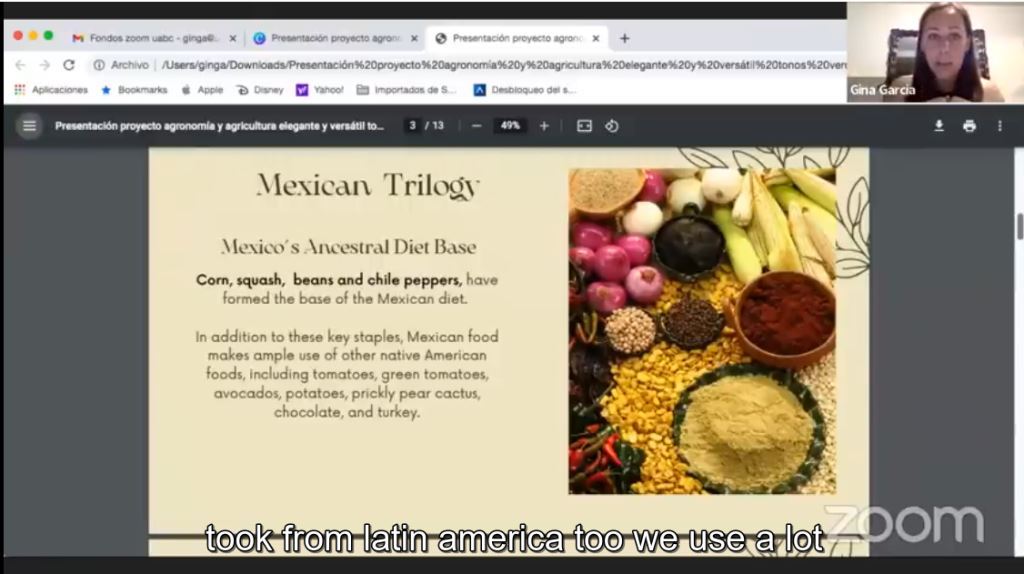
The Mexican dietary tradition indicates that whole grains, legumes, and vegetables are the most representative food groups in the TMexD, as mentioned in most (75%) studies, including all evaluated subgroups. In addition, corn (mostly in the form of tortillas), beans, pumpkin, tomatoes, chilies, and onions are potentially basic elements of TMexD, as these are the only individual foods mentioned in most studies, including all evaluated subgroups. . Indeed, maize (a grain), beans (beans), and pumpkin (a vegetable) have long been staples of the diet in Mexico, as they are part of an ancient agro-ecosystem known as Milpa. Chili, although present only in a few milpa cultivations, is particularly characteristic of Mexican food and cuisine, which may also explain its high quotient. Often, chilies are also combined with tomatoes and onions in sauces to flavor food.
The above material was delivered by a presenter from Mexico in an international webinar held by STEKOM University in collaboration with Universities from Mexico, Ukraine, Ethiopia and various other parties. The title of the presentation brought by the presenter from Mexico was "Get to know the beauty of diverse cultures between countries". The presenter's name was Professor Gina Garcia Walther who is an academic.
This international webinar activity is part of the implementation of STEKOM University's commitment to increase various international activities. This was done in order to realize the vision to become an international-class university. Various international activities carried out by STEKOM University continue from year to year. There are international activities that are sustainable and there are also some international activities that are not sustainable. All types of international activities are accommodated and regulated by the International department of STEKOM University.
International Webinar 2022 - Get to know the beauty of diverse cultures between countries – Part 2
International Webinar
Back to News
International Webinar
Sunday, January 22, 2023
Priyadi, S.Kom, M.Kom
0 Views