
A STEKOM university lecturer explains the natural hierarchical architecture of nanoparticles. The hierarchical structure can be clearly observed in nature in the form of self-arranging flower petals, stems and tree branches. These structures have emerged as architectures with extraordinary functional potential in nanoscience and nanotechnology.
Hierarchical nanostructures are integrated architectures built from small building blocks (nano units) such as nanoparticles, nanorods, nanowires, nanotubes, and nanosheets, etc. diffusion channels, diverse junction interfaces, and many active sites. The outstanding properties of hierarchical nanostructures provide new opportunities for designing superior active catalysts, ultra-sensitive sensors and excellent adsorption materials for a wide range of technological applications.
Whatever their origin, nano-sized particles are characterized by a larger fraction of atoms at the surface, which determines their increased surface energy and reactivity. Purpose-built ENPs have controlled chemical composition, size, and properties. Hence they have less polydisperse character and some improved properties compared to NNP. For example, due to its controlled surface structure and smaller size, TiO2 ENP has catalytic and redox properties that natural ones do not. Additionally, the presence of persistent engineered coatings on ENPs gives them distinct properties from core materials in terms of dissolution, stability, and effects. Similar to NNPs, ANP surfaces are modified in environmental and living systems, through the adsorption and desorption of organic and inorganic compounds of natural or anthropogenic origin. Such changes can affect the surface properties of nano-sized particles, hence their interactions with trace elements, organic micropollutants, colloids, surfaces and biota. Therefore, the pure synthetic identity of ENP can also be questioned considering its interactions with various natural compounds. The existence of "purely natural" NNP is a source of question because the entire biosphere is related to processes of origin and by materials/compounds that qualify as natural that may be influenced by human activities. It will therefore be useful to consider that "transformed" nano-sized particles involve both anthropogenic and natural components and thus will have more complex environmental fates and impacts. Next, we provide two brief examples considering the interactions of ANP with natural compounds and NNP with inorganic and organic pollutants.
Natural nanoparticles are generated in different environmental compartments by various physical, chemical and biological processes, such as (bio)chemical weathering of minerals, photo-oxidation, redox reactions and precipitation, (bio)mineralization, physical fragmentation, gas-solid nucleation in the atmosphere, etc. . Generation of ANP is the result of human-related activities or processes (e.g., combustion), due to the life cycle of products containing nanoparticles or accidental release. Examples of sources inherent in human activities include: (i) dust generation by various activities; usually mining, tillage, and demolition/construction. Atmospheric transport is then a vector of long-distance transport; (ii) atmospheric release and nucleation; (iii) release of treated and untreated wastewater; and (iv) storage in insufficiently confined areas or dispersal of sludge from sewage treatment plants. Natural processes may also be responsible for the manufacture of ANP from different materials. For example, the weathering of plastics can result in the formation of micro- and nanoplastics in waters and marine organisms.
The above material was presented by a presenter from Bangladesh in an international webinar held by STEKOM University in collaboration with the University of Bangkadesh and various other parties. The name of the presenter is Marastika Wicaksono Aji Bawono, S.Kom., M.M., M.Kom. who is a lecturer at STEKOM University, Indonesia.
This international webinar activity is part of the implementation of STEKOM University's commitment to increase various international activities. This was done in order to realize the vision to become an international-class university. Various international activities carried out by STEKOM University continue from year to year. There are international activities that are sustainable and there are also some international activities that are not sustainable. All types of international activities are accommodated and regulated by the International department of STEKOM University.
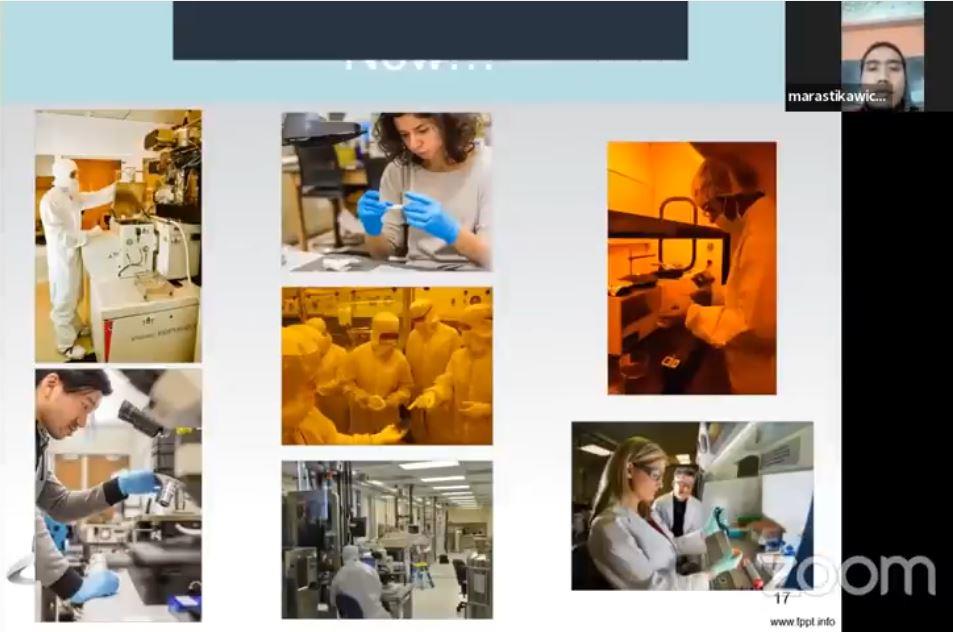
International Webinar 2022 - Implementation of Nano Technology in Food Industry - part 11
International Webinar
Back to News
International Webinar
Sunday, January 15, 2023
Priyadi, S.Kom, M.Kom
0 Views