
Green engineering besides having many advantages, but also has many limitations. The following are some of the limitations that exist in green engineering:
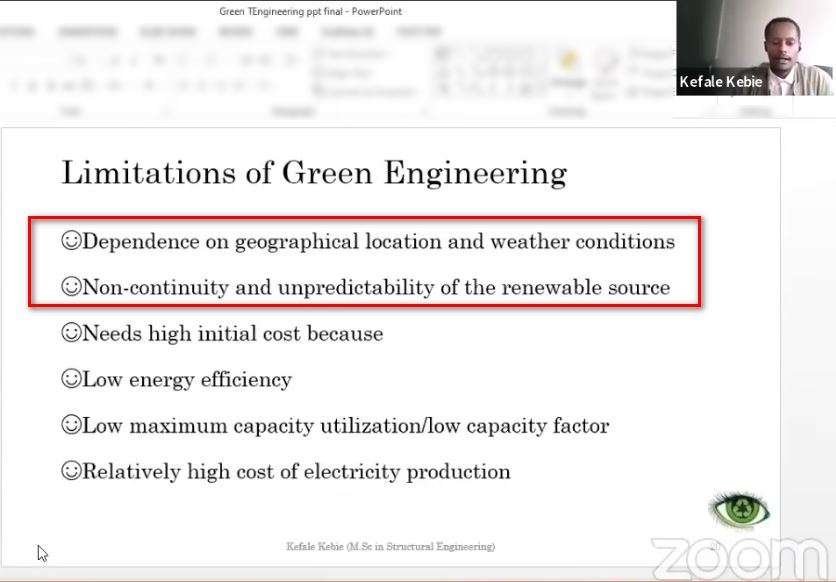
- Dependence on geographic location and weather conditions
Geography affects the weather in many ways. One of the things that can affect the weather is the topography of an area. It refers to the arrangement of natural and man-made features in an area. It can include mountains, rivers, or cities. Topographical features such as mountains affect weather largely by directing air currents. For example, air is forced up over mountains. Moist air cools as it rises, and then clouds release the air, causing precipitation such as rain or snow. This is why one side of the mountains - the side closest to the ocean - often gets more rain.
The latitude of an area on the earth's surface (location in terms of north and south) also affects the weather, because it changes the intensity of sunlight that area receives. This has a direct effect on temperature. If you're at the equator, the sun is always high in the sky, and it radiates sunlight, making it hotter. Meanwhile, at the North Pole and South Pole, the position of the sun is always low in the sky causing the sunlight to be scattered and thinned out. The equator also doesn't have seasons that change the weather because the sun's altitude in the sky doesn't vary much throughout the year: whether the Earth is tilted toward the sun, or away from the sun, the angle of sunlight is fairly consistent.
The above conditions will ultimately greatly affect the success of green engineering. A technology may be very good to be applied in certain locations, but it will be very difficult to be applied in other locations. So in green engineering, it's best to pay attention to such geographic constraints.
- Non-continuity and utilization of renewable sources
Some of the commodities needed in green engineering are often found in conditions that do not exist continuously. An example is sunlight which exists only during the day on most of the earth's surface. Meanwhile at night, these resources cannot be accessed.
Uncertainty of resources for green engineering is also often a problem. For example, sunlight resources are sometimes affected by the weather. When it's cloudy or raining, of course the empowerment of these energy sources will be very disturbed, even unable to work at all.
The STEKOM University international webinar presenter who delivered the material was Kefale Kebie Bishaw who has an M.Sc academic degree in Structural Engineering. He is also a lecturer and researcher at Debre Tabor University which is located in the city of Debre Tabor, Country of Ethiopia. STEKOM University has collaborated with the University several times. This time the international activity being held was an international webinar entitled "Advantage of Green Engineering".
The title of the presentation delivered by Mr. Kefale was "Advantage of Green Engineering / Technology". At the beginning of his presentation, Mr. Kefale explained the outline of his presentation. The outline presented by Mr. Kefale included the following points:
- What is Green Engineering?
- Green Engineering Category,
- Green Engineering Push Factor Pen,
- Benefits and Some Limitations,
- Conclusions and recommendations.
The webinar activity is part of the implementation of STEKOM University's commitment to increase various international activities in order to realize the vision to become an international-class university. Various international activities carried out by STEKOM University continue from year to year. There are international activities that are sustainable and there are also some international activities that are not sustainable. All types of activities are accommodated internationally and regulated by the International department of STEKOM University.
International Webinar 2022 - The advantages of green engineering part 21
International Webinar
Back to News
International Webinar
Wednesday, December 7, 2022
Priyadi, S.Kom, M.Kom
0 Views