
Population imbalance will affect global food shortages. World food demand shows a tendency to increase faster than supply. FAO (2008) estimates that the need for food for developing countries will increase by 60% in 2030 and double in 2050, or equivalent to the need to increase world production by 42% in 2030 and 70% in 2050.
An increase in food demand as a consequence of an increase in world population according to the scenario that the world population will increase by 73 million people each year between 1995-2020, this means that there has been an increase of 32% in that period, so it is estimated that the world population will reach 7.5 billion people in 2020 (Behnassi and Sanni, 2011). A sharp increase in the need for food will cause an increase in the price of all types of food, so that the number of poor and hungry people will increase.
Currently, the world's population who are poor and hungry every day exceed 1 billion people (more than 15% of the population), because they cannot access the food needed to live a healthy and productive life. They do not get their right to adequate food (food is a human right). There is a paradox, where an increase in food production continues to occur, while the number of people who are hungry continues to increase.
The food crisis was also exacerbated by short-term conditions that occurred as a result of the significant increase in food commodity prices. The world food crisis began in 2007 which was marked by an increase in hunger. This was followed by a 'shock' in food prices in mid-2008 causing more and more people to be unable to afford food at high prices, so that in 2009 there was a very significant increase in hunger. This incident was triggered by the issue of climate disturbances in several producing countries, low national food stocks in various countries, and the conversion of food into biofuel energy.
The failure of supply to meet the sharp increase in demand has caused an imbalance in the structure of the world agricultural system. The causes of this structural imbalance are multiple. On the supply side, the main factor is the insufficient flow of resources to agriculture from the private sector and the government, as well as donor countries to developing countries, so investment in agriculture is very limited. On the demand side, people's purchasing power is low due to the high poverty rate.
The global financial crisis that occurred in America and Europe will have a negative impact on world food security, because in addition to these countries being the world's largest food supplier, they are also donor countries that can assist agricultural development in developing countries.
Increasing population and increasing income and lifestyle of the world's people have led to a significant increase in food demand. Meanwhile, on the other hand, the increase in food supply has not been able to meet demand. Therefore, the issue of food security is increasingly important. In the 1970s there was a tendency to understand the issue of food security only from an economic perspective, generally from a supply perspective. Currently, with the increase in the world's population experiencing food shortages to more than 1 billion people, and the scope of the food crisis is increasingly widespread, various countries are experiencing chronic hunger which then causes disaster both from a political, economic and health perspective.
The challenges faced are increasingly complex to meet food needs, and balanced food consumption. Conventional policies from the government are not sufficient to respond to the challenges faced with regard to food security. Among these challenges are economic problems, water and energy shortages, land degradation, climate risks, as well as various socio-political issues.
The increase in the number of people who lack food began to increase sharply in 2007 (added 75 million people), as a sign of the world food crisis. This situation was followed by a spike in food prices in mid-2008. High food prices led to an increasing number of people without access to food, so that in 2009 the increase in the number of people lacking food was even higher, increasing by 104 million people. No country is truly resilient to the effects of food shortages.
The presenter who delivered the material was Abdullah Athar, Senior Lerturer College of Management Science from Pakistan. This material was presented at an international webinar organized by the University of Science & Computer Technology (STEKOM University) in collaboration with the Karachi Institute of Economics & Technology (Pakistan), Universiti Malaysia Perlis (Malaysia), STIE STEKOM, Association of Industrial and Vocational Communities (PERKIVI), Indonesian Smart Teacherpreneur Association (PTIC) and TopLoker.com. The webinar will be held on December 8, 2022 online using zoom media. All scheduled international presenters managed to attend and fill in the material well.
The webinar activity is part of the implementation of STEKOM University's commitment to increase various international activities in order to realize the vision to become an international-class university. Various international activities carried out by STEKOM University continue from year to year. There are international activities that are sustainable and there are also some international activities that are not sustainable. All types of international activities are accommodated and regulated by the International department of STEKOM University.
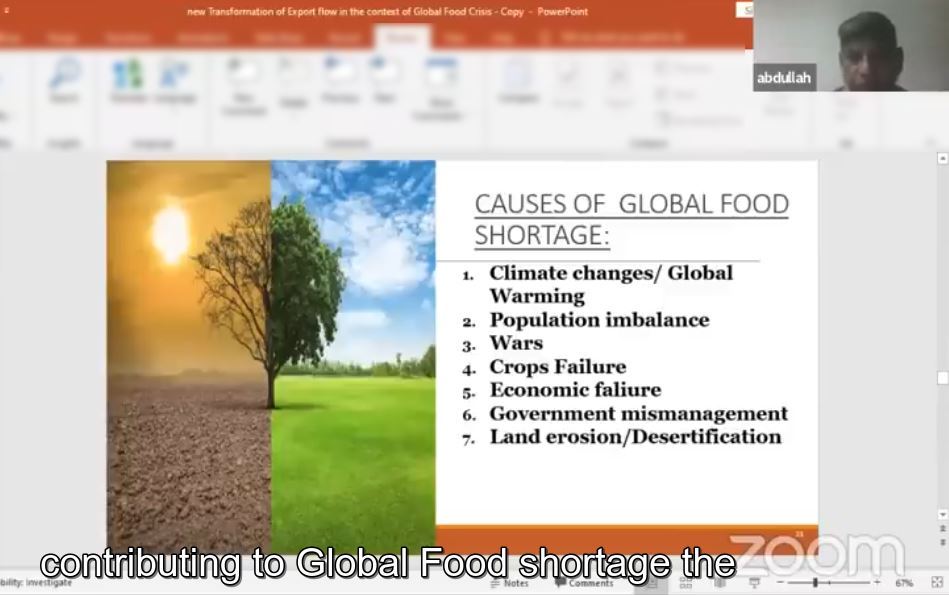
International Webinar 2022 - Transformation of Export Flows in the Context of Global Food Crisis - Part 14
International Webinar
Back to News
International Webinar
Tuesday, December 20, 2022
Priyadi, S.Kom, M.Kom
0 Views