
Food security is a flexible concept as reflected in various efforts to define it in research and policy use. Even a decade ago, there were around 200 definitions in published writings. Whenever a concept is introduced in a research title or objective, it is necessary to look more closely to establish explicit or implied definitions.
The sustainable evolution of food security as an operational concept in public policy has reflected a wider recognition of the complex technical and policy issues involved. The last careful redefinition of food security was negotiated in the process of international consultations leading up to the World Food Summit (WFS) in November 1996. The contrasting definitions of food security adopted in 1974 and 1996, together with the official definitions of FAO and the World Bank documents from the mid-1980s, are outlined below with any substantive changes in definition underlined. This comparison of definitions highlights the considerable reconstruction of official thinking about food security that has occurred over the past 25 years. These statements also inform policy analysis, which has changed our understanding of food security as a matter of international and national responsibility.
Food security as a new concept emerged in the mid-1970s, in discussions on international food issues during the global food crisis. The initial focus of attention was primarily on the issue of food supply - ensuring the availability and to some extent price stability of staple foods at the international and national levels. Supply-side, international and institutional concerns reflect the changing organization of the global food economy that has fueled the crisis. A process of international negotiations followed, leading to the 1974 World Food Conference, and new institutional arrangements that included information, resources to promote food security and a forum for dialogue on policy issues.
The problems of famine, starvation and food crises were also widely studied, following the events of the mid-1970s. The result is a redefinition of food security, recognizing that the behavior of potentially vulnerable and affected people is a critical aspect.
A third, perhaps most important, factor in changing views on food security is the evidence that the technical success of the Green Revolution did not automatically and rapidly reduce poverty and malnutrition rates dramatically. These problems are recognized as a result of a lack of effective demand.
The international community has accepted this increasingly broad statement of shared goals and implied responsibilities. But the practical response has been to focus on the narrower and simpler goals of governing international and national public action. The main goal declared in international development policy discourse is the reduction and elimination of poverty. WFS 1996 exemplifies this policy direction by making it the main goal of international action for food security to halve the number of people who are hungry or malnourished by 2015.
Basically, food security can be described as a phenomenon related to individuals. The nutritional status of each household member is the main focus, and there is a risk that this adequate status will not be achieved or will become weak. The last risk describes individual vulnerability in this context. As the definitions reviewed above imply, vulnerability can occur as either a chronic or transient phenomenon. Useful job definitions are described below.
Food security exists when all people, at all times, have physical, social and economic access to sufficient, safe and nutritious food that meets their dietary needs and food preferences for an active and healthy life. Household food security is the application of this concept at the family level, with the individuals in the household as the focus of attention.
The presenter who delivered the material was Abdullah Athar, Senior Lerturer College of Management Science from Pakistan. This material was presented at an international webinar organized by the University of Science & Computer Technology (STEKOM University) in collaboration with the Karachi Institute of Economics & Technology (Pakistan), Universiti Malaysia Perlis (Malaysia), STIE STEKOM, Association of Industrial and Vocational Communities (PERKIVI), Indonesian Smart Teacherpreneur Association (PTIC) and TopLoker.com. The webinar will be held on December 8, 2022 online using zoom media. All scheduled international presenters managed to attend and fill in the material well.
The webinar activity is part of the implementation of STEKOM University's commitment to increase various international activities in order to realize the vision to become an international-class university. Various international activities carried out by STEKOM University continue from year to year. There are international activities that are sustainable and there are also some international activities that are not sustainable. All types of international activities are accommodated and regulated by the International department of STEKOM University.
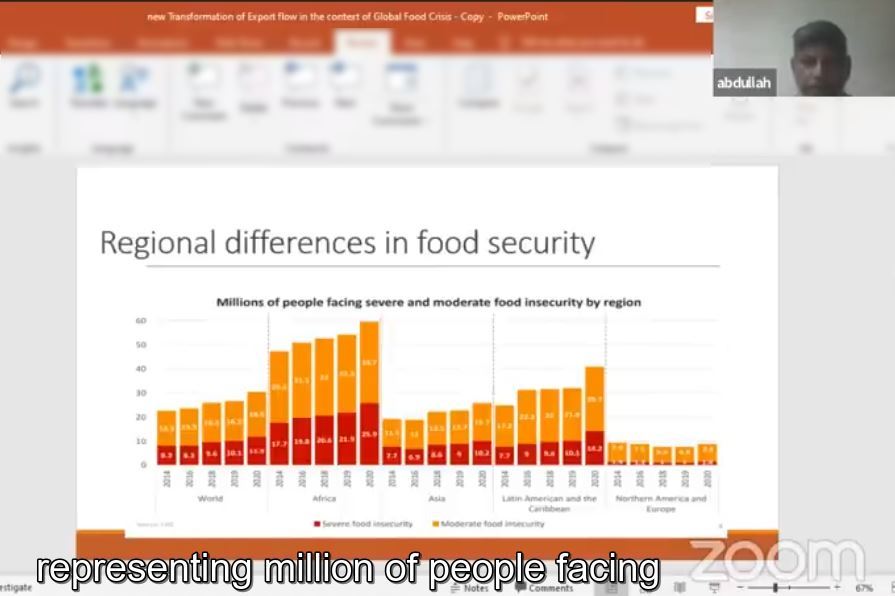
International Webinar 2022 - Transformation of Export Flows in the Context of Global Food Crisis - Part 8
International Webinar
Back to News
International Webinar
Sunday, December 18, 2022
Priyadi, S.Kom, M.Kom
0 Views