
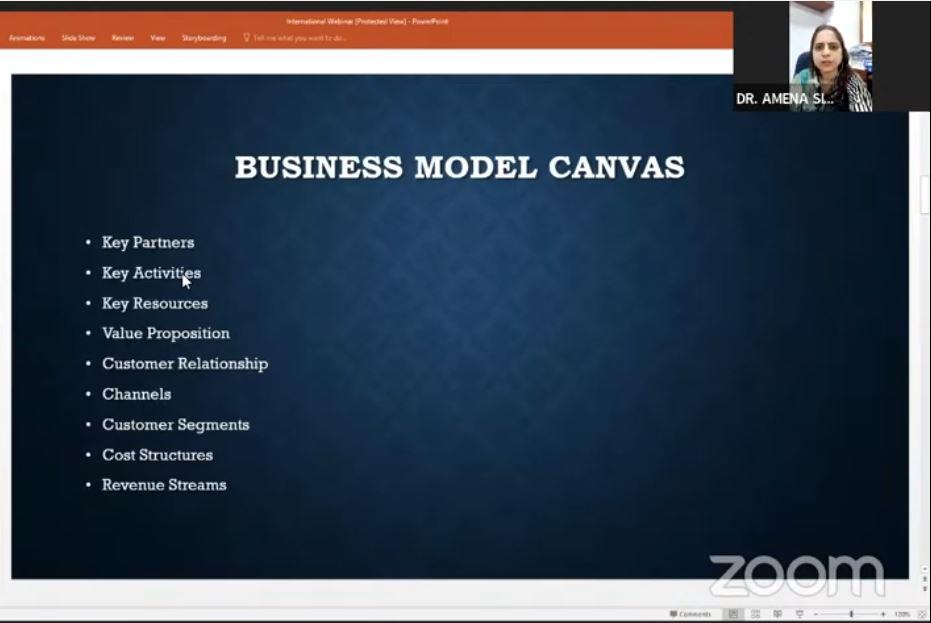
The Business Model Canvas or BMC is a management strategy designed to translate ideas and concepts of a business into a visual form. In simple terms, the definition of the Business Model Canvas is a management framework to make it easier to see an overview of business ideas and their realization quickly.
When compared to a business plan that has dozens of pages, this business model canvas is much more concise because it is arranged on only one page. Therefore, this business framework is most popular among startup businesses. Initially, the business model canvas was introduced in 2005 by a Swiss entrepreneur named Alexander Osterwalder in his book Business Model Generation. In it, he explains about a simple framework that represents the important elements in the business model. The following are the elements contained in it.
1. Customer Segments (consumer segmentation)
The first element that must exist in the business model canvas is consumer segmentation. Whatever type of business you have, first determine the right customer segmentation from the start. You also have to determine who will be your business target, which customer segments have the potential to buy your product or service.
2. Value Proposition (consumer value proposition)
After determining who your target customers are, then you must know how your business can benefit customers. This value proposition will explain the points or value offered by a business for its consumer segments. In order to be more detailed, answering the questions below can help you in preparing the right value proposition.
3. Channels
Channel is a medium of interaction between businesses and consumers to convey their products and services. Determination of this channel is one of the determining factors for success in running a business. Think carefully about which channels will be used to reach consumers. For example, by using social media, websites, etc.
One of the most appropriate channels to deliver products to consumers is through the website. Creating a business website can help you reach more consumers and easily. In addition, the website can also display your product catalog in an attractive way and is also a place for customers to make transactions.
4. Customer Relationship (consumer relations)
After knowing and understanding the appropriate market segmentation and the channels to be used, now is the time to determine how your business can interact with customers. Understand how to establish a relationship with customers so they don't easily turn to competitors. Examples that you can apply, for example, by giving discounts, holding giveaways, or providing membership programs.
5. Revenue Streams (Sources of income)
This business canvas element draws the sources of income that come from your business. This is a very important thing and needs to be managed as much as possible. Try to think about how to increase the income of the business you started. For example, apart from relying on the main source of income from product sales, as your business grows, you can also create a membership program or provide options for upgrades at prices that tend to be higher. Understand the strategies you can employ to earn bigger profits. Do not let any product or performance that is not used optimally.
6. Key Resources
In order to remain competitive in the realm of business that you live in, you need appropriate resources to support your business activities. Key resource is a list of resources that you should have to realize the value proposition.
It should be understood that the character of each customer is different. Therefore, you must understand how to win over and retain existing customers. Not only when selling products, but also when dealing with complaints, answering various consumer questions, and so on.
7. Key Activities (activities carried out)
Key activities are an element in the business model canvas which describes all activities related to the business. All of these activities must produce a company value proposition.
8. Key Partnership (Cooperation)
Key partnership is an element in the business model canvas which contains a list of resources outside the company that you need to achieve key activities and also to deliver value to customers. The main partner of iji can be a third party, such as only suppliers, business partners or other companies that support your business activities.
9. Cost Structure
Cost structure is the last element in the business model canvas. This element includes equal distribution of costs to operate the business according to the value proposition. In addition, it is also to manage the business budget more efficiently to minimize the risk of loss and also the company's unhealthy financial condition. To manage finances in a business, you need to create and compile good financial reports and bookkeeping.
The material above was presented by a presenter from Pakistan in an international webinar held by STEKOM University in collaboration with Universities from Pakistan, Malaysia, and various other parties. The name of the presenter is Dr. Amena Sibghatullah who is an assistant professor and head of marketing college of management science, KIET University, Pakistan.
This international webinar activity is part of the implementation of STEKOM University's commitment to increase various international activities. This was done in order to realize the vision to become an international-class university. Various international activities carried out by STEKOM University continue from year to year. There are international activities that are sustainable and there are also some international activities that are not sustainable. All types of international activities are accommodated and regulated by the International department of STEKOM University.
International Webinar 2023 - The Role of Digital Based Innovative to Improve Competitiveness – Part 13
International Webinar
Back to News
International Webinar
Wednesday, February 8, 2023
Priyadi, S.Kom, M.Kom
0 Views