
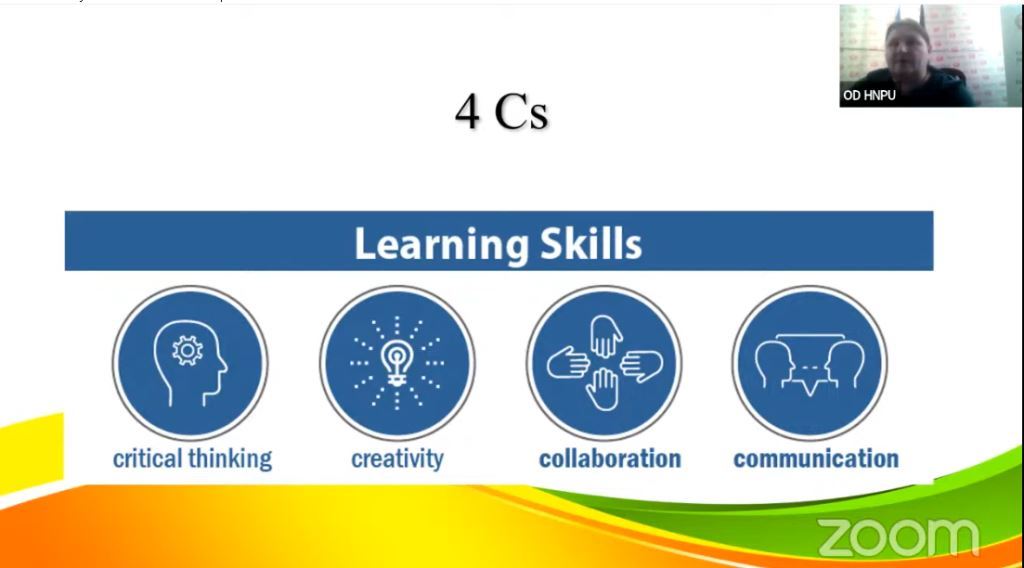
Critical thinking is the analysis of available facts, evidence, observations, and arguments to form judgments. The subject matter is complex; There are several different definitions, which generally include a rational, skeptical, and unbiased analysis or evaluation of factual evidence. Critical thinking is independent thinking, self-discipline, self-monitoring and self-correction and hence, a critical thinker is a person who practices critical thinking skills or has been educated in the discipline. Richard W. Paul has stated that the mind of a critical thinker involves the intellectual abilities and personal traits necessary for critical thinking. Critical thinking presupposes agreeing to rigorous standards of excellence and mindful usage dictates. This requires effective communication and problem-solving skills and a commitment to overcome genuine egocentrism and sociocentrism.
The study of logical argumentation is relevant to the study of critical thinking. Logic deals with the analysis of arguments, including the judgment of their truth or falsity. In the field of epistemology, critical thinking is considered to be logically correct thinking, which allows for a distinction between logically correct statements and logically incorrect statements.
In "First Wave" logical thinking, the thinker is removed from the train of thought, and the analysis of the relationships between concepts or points in thought is ostensibly free from any bias. In her essay Beyond Logicism in Critical Thinking Kerry S. Walters describes this ideology as follows: "A logistic approach to critical thinking conveys the message to students that thinking is valid only when conformed to informal (and, to a lesser degree, formal) procedures and that good thinkers should aim for a style of examination and judgment that is analytical, abstract, universal, and objective. This model of thinking is so deeply rooted in conventional academic wisdom that many educators accept it as canon". These principles coincide with an increasing reliance on a quantitative understanding of the world.
In the 'second wave' of critical thinking, writers consciously move away from the logocentric mode of critical thinking that is typical of the 'first wave'. Although many scholars are beginning to take a less exclusive view of what constitutes critical thinking, rationality and logic remain widely accepted as important foundations for critical thinking. Walters argues that exclusive logic in the first wave sense is based on "the unwarranted assumption that good thinking can be reduced to logical thinking".
Kerry S. Walters, a professor of philosophy emeritus of Gettysburg College, argues that rationality demands more than just logical or traditional methods of problem solving and analysis or what she calls the "calculus of justification" but also considers "cognitive acts such as imagination, conceptual creativity, intuition, and insight". Linear and non-sequential thought both have to engage in rational thought.
The ability to critically analyze an argument—to dissect structure and components, thesis and reasoning—is essential. But so is the ability to be flexible and consider alternatives and non-traditional perspectives. It is this complementary function that allows critical thinking to become a practice that includes imagination and intuition in cooperation with traditional modes of deductive inquiry.
The material above was delivered by a presenter from Ukraine in a visiting lecturer held by STEKOM University in collaboration with Universities from Ukraine. The title of the presentation is "Learning Skills in 21st Century Education and Work Environment".
This international webinar activity is part of the implementation of STEKOM University's commitment to increase various international activities. This was done in order to realize the vision to become an international-class university. Various international activities carried out by STEKOM University continue from year to year. There are international activities that are sustainable and there are also some international activities that are not sustainable. All types of international activities are accommodated and regulated by the International department of STEKOM University.
International Webinar 2023 - Visiting Lecture with Lecturer from Hlukhiv National Pedagogical University (Ukraine) – Part 1
International Webinar
Back to News
International Webinar
Monday, February 20, 2023
Priyadi, S.Kom, M.Kom
0 Views