
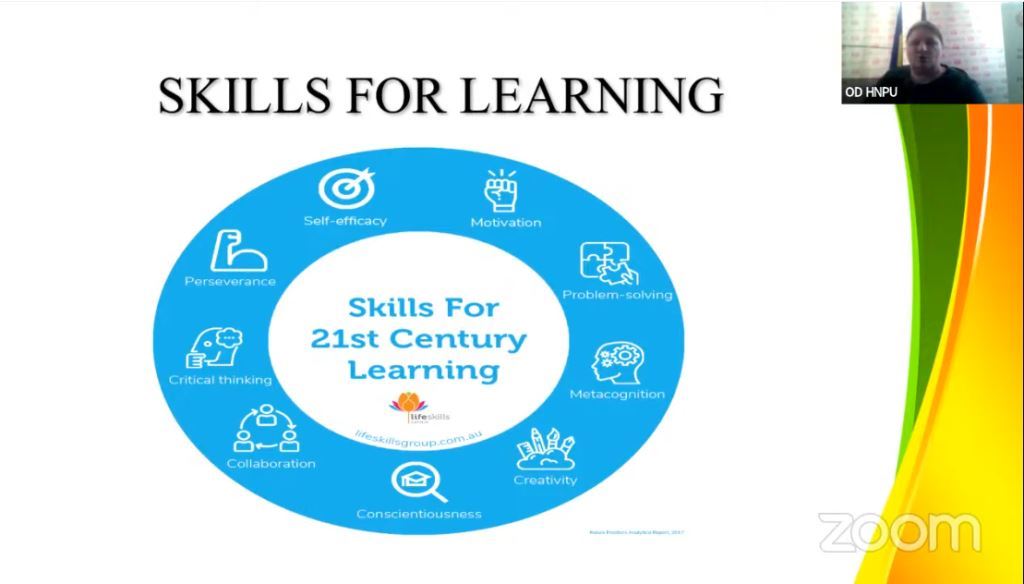
Caution is a personality trait of being careful, or diligent.
Consciousness implies a desire to do one's duty well, and to take
one's obligations to others seriously. Meticulous people tend to be
efficient and organized as opposed to relaxed and disorganized
people. They show a tendency to display self-discipline, act
obediently, and aim to achieve; they display planned rather than
spontaneous behavior; and generally reliable. It is manifested in
distinctive behavior such as neat and systematic; also includes
elements such as prudence, thoroughness, and deliberation (the
tendency to think carefully before acting).
Consciousness
is one of the five traits of the Five Factor Model and the HEXACO
model of personality and is an aspect of what has traditionally been
called having character. Conscientious individuals are generally
hardworking, and reliable. When it gets to extremes, they may also be
"workaholics", perfectionists, and compulsive in behavior.
People who score low in mindfulness tend to be relaxed, less
goal-oriented, and less driven by success; they are also more likely
to engage in antisocial and criminal behavior.
Conscientiousness
is one of the five main dimensions in the Big Five personality model
(also called the Five Factor Model or OCEAN), which consists of
openness to experience, conscientiousness, extraversion,
agreeableness, and neuroticism. Two of the many personality tests
that assess these traits are Costa and McCrae's NEO PI-R and
Goldberg's NEO-IPIP. According to these models, conscientiousness is
considered an ongoing personality dimension, rather than a
categorical 'type' of person.
Within the NEO
framework, Conscientiousness is viewed as having six aspects:
Competence, Order, Obedience, Struggle for Achievement,
Self-Discipline, and Deliberation. Other models suggest a smaller set
of two "facets": regularity and persistence make up the
middle levels of an organization, with regularity related to the
desire to keep things organized and tidy and persistence being more
related to productivity and work ethic.
Other
personality traits ((low) extraversion, (high) agreeableness, (low)
openness, and (low) neuroticism) are related to high
conscientiousness along with impulse control. Behaviorally, low
conscientiousness is associated with an inability to motivate oneself
to perform tasks the individual wishes to
complete.
Conscientiousness also appears in other
personality models, such as Cloninger's Temperament and Character
Inventory, which are related to self-direction and persistence. It
also includes the special traits of rule awareness and perfectionism
in Cattell's 16 PF model. This is negatively related to impulsive
sensation seeking in Zuckerman's five alternative models. Traits
related to conscientiousness are often assessed by self-report
integrity tests that various employers administer to prospective
employees.
Terms such as 'hard worker', 'reliable'
and 'perseverant' describe desirable aspects of character. Once
believed to be a moral evaluation, caution is dismissed as a real
psychological attribute. The reality of individual differences in
conscientiousness has now been clearly established by cross-observer
agreement studies. Peer and expert ratings confirm the self-reports
people make about their level of caution. In addition, both
self-report and observer ratings of caution predicted real-life
outcomes such as academic success.
For most of the
20th century, psychologists believed that personality traits could be
divided into two categories: temperament and character. Temperament
traits are considered to be biological in nature, whereas character
traits are thought to be learned either during childhood or
throughout life. With the advent of the FFM (Five-Factor Model),
behavioral geneticists began the systematic study of various
personality traits, and it soon became clear that the five factors
were substantially heritable. Identical twins show very similar
personality traits even when they have been separated at birth and
raised apart, and this also applies to character traits and
temperament traits. Parents and society influence the way
consciousness is expressed, but they don't seem to influence the
level.
The material
above was delivered by a presenter from Ukraine in a visiting
lecturer held by STEKOM University in collaboration with Universities
from Ukraine. The title of the presentation is "Learning Skills
in 21st Century Education and Work Environment".
This international webinar activity is part of the implementation of STEKOM University's commitment to increase various international activities. This was done in order to realize the vision to become an international-class university. Various international activities carried out by STEKOM University continue from year to year. There are international activities that are sustainable and there are also some international activities that are not sustainable. All types of international activities are accommodated and regulated by the International department of STEKOM University.