
Industry analysis is a market assessment tool used by businesses and analysts to understand the competitive dynamics of an industry. It helps businesses identify their position relative to other participants in the industry, as well as the opportunities and threats that may arise. Industry analysis is a crucial component of effective strategic planning, as it enables small business owners to focus their resources on developing unique capabilities that could lead to a competitive advantage
. There are three commonly used and important methods of performing industry analysis:
- Porter's Five Forces: This method analyzes the five competitive forces that shape every industry and determine its overall attractiveness and profitability.
- SWOT Analysis: This method examines the strengths, weaknesses, opportunities, and threats of a business or industry.
- PEST Analysis: This method analyzes the political, economic, social, and technological factors that affect an industry.
An industry analysis consists of three major elements :
- Underlying forces at work in the industry
- Overall attractiveness of the industry
- Critical factors that determine a company's success within the industry
Aspects of industry analysis include demand-supply statistics, degree of competition within the industry, state of competition between the industry and emerging industries, future prospects based on things like technological advances, credit systems, and influence of other external factors in the past and possibly the future.
Industry analysis is important in strategic management for several reasons, including:
1. Understanding the market: Industry analysis helps businesses understand the competitive dynamics of an industry, including the interplay of supply and demand, the competition within the industry, and how the industry holds up against other emerging industries.
2. Identifying opportunities and threats: Industry analysis allows businesses to identify opportunities for growth and gain a competitive advantage by developing unique capabilities. It also helps businesses identify potential threats to their industry and proactively protect themselves.
3. Developing effective strategies: Industry analysis helps businesses plan effective strategies by identifying critical factors that determine a company's success within the industry. It also helps businesses understand the market forces at work in their industry, which is essential for devising and implementing a successful strategic plan.
4. Demonstrating understanding to investors: Including a thorough industry analysis in a business plan demonstrates to investors that the business owner understands the potential opportunities and pitfalls of their business.
In summary, industry analysis is important in strategic management because it helps businesses understand the market, identify opportunities and threats, develop effective strategies, and demonstrate understanding to investors.
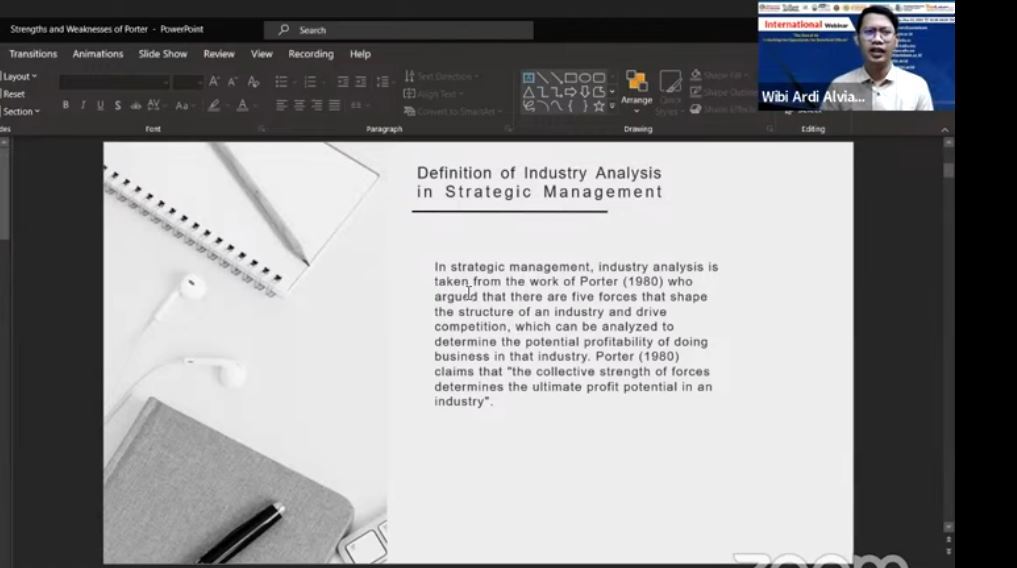
The above material was delivered by a presenter from Indonesia in an international webinar held by STEKOM University in collaboration with Kuala Lumpur University from Malaysia. The name of the presenter is Wibi Ardi Alvianto, M.Pd. He is a Lecturer at STEKOM University in the Visual Communication Design Study program. The international webinar was held on May 23 2023 which was hosted by Ms. Novita. The media used in the international seminar is zoom and broadcast directly to Youtube. The event went very well and was quite lively, marked by the many participants who took part and the number of questions asked after the presenters finished delivering their presentations.
This international webinar activity is part of the implementation of STEKOM University's commitment to increase various international activities. This was done in order to realize the vision to become an international-class university. Various international activities carried out by STEKOM University continue from year to year. There are international activities that are sustainable and there are also some international activities that are not sustainable. All types of activities are accommodated internationally and regulated by the International department of STEKOM University.
. There are three commonly used and important methods of performing industry analysis:
- Porter's Five Forces: This method analyzes the five competitive forces that shape every industry and determine its overall attractiveness and profitability.
- SWOT Analysis: This method examines the strengths, weaknesses, opportunities, and threats of a business or industry.
- PEST Analysis: This method analyzes the political, economic, social, and technological factors that affect an industry.
An industry analysis consists of three major elements :
- Underlying forces at work in the industry
- Overall attractiveness of the industry
- Critical factors that determine a company's success within the industry
Aspects of industry analysis include demand-supply statistics, degree of competition within the industry, state of competition between the industry and emerging industries, future prospects based on things like technological advances, credit systems, and influence of other external factors in the past and possibly the future.
Industry analysis is important in strategic management for several reasons, including:
1. Understanding the market: Industry analysis helps businesses understand the competitive dynamics of an industry, including the interplay of supply and demand, the competition within the industry, and how the industry holds up against other emerging industries.
2. Identifying opportunities and threats: Industry analysis allows businesses to identify opportunities for growth and gain a competitive advantage by developing unique capabilities. It also helps businesses identify potential threats to their industry and proactively protect themselves.
3. Developing effective strategies: Industry analysis helps businesses plan effective strategies by identifying critical factors that determine a company's success within the industry. It also helps businesses understand the market forces at work in their industry, which is essential for devising and implementing a successful strategic plan.
4. Demonstrating understanding to investors: Including a thorough industry analysis in a business plan demonstrates to investors that the business owner understands the potential opportunities and pitfalls of their business.
In summary, industry analysis is important in strategic management because it helps businesses understand the market, identify opportunities and threats, develop effective strategies, and demonstrate understanding to investors.
The above material was delivered by a presenter from Indonesia in an international webinar held by STEKOM University in collaboration with Kuala Lumpur University from Malaysia. The name of the presenter is Wibi Ardi Alvianto, M.Pd. He is a Lecturer at STEKOM University in the Visual Communication Design Study program. The international webinar was held on May 23 2023 which was hosted by Ms. Novita. The media used in the international seminar is zoom and broadcast directly to Youtube. The event went very well and was quite lively, marked by the many participants who took part and the number of questions asked after the presenters finished delivering their presentations.
This international webinar activity is part of the implementation of STEKOM University's commitment to increase various international activities. This was done in order to realize the vision to become an international-class university. Various international activities carried out by STEKOM University continue from year to year. There are international activities that are sustainable and there are also some international activities that are not sustainable. All types of activities are accommodated internationally and regulated by the International department of STEKOM University.