
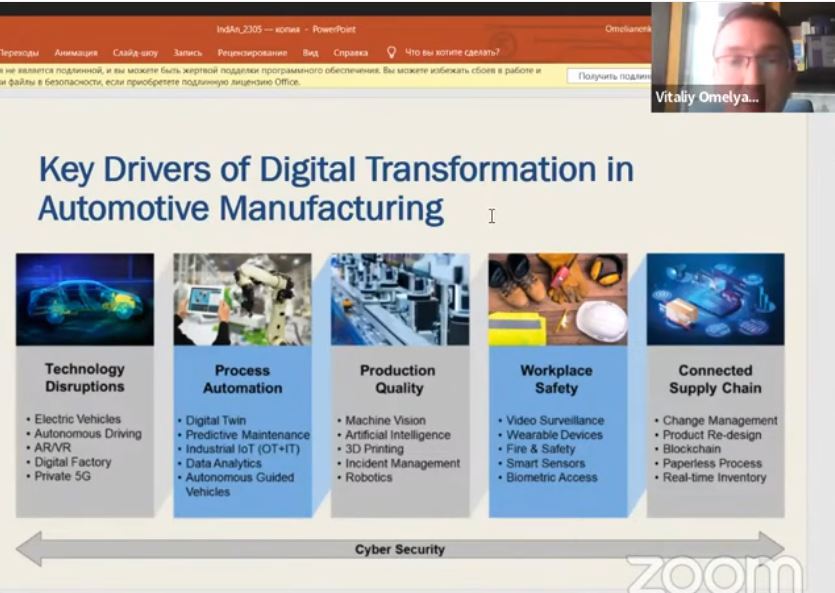
The automotive industry has undergone a significant transformation thanks to advances in digital technology. In an effort to stay competitive and innovate, automakers have adopted a series of new solutions and practices that accelerate their transformation. Some of the key drivers driving this change are technological disruption, process automation, production quality, work safety, and connected supply chains.
First of all, technological disruption has become key in the digital transformation of the automotive industry. Innovations such as artificial intelligence (AI), Internet of Things (IoT), big data analytics, and additive manufacturing (3D printing) have changed the way things work and expanded the potential of this industry. Technology disruptions enable the development of smarter and more efficient vehicles, connected manufacturing systems and enhanced customer experiences. Successful automakers are those that are able to identify and adopt the technologies that are most relevant to their needs.
Furthermore, process automation is becoming an important factor in the digital transformation of the automotive industry. By leveraging robotics, process automation and artificial intelligence, automakers can improve operational efficiency and productivity. Machine-controlled production processes can reduce reliance on manual work, avoid human error, and increase consistency in quality and production time.
Production quality is also a major focus in the digital transformation of the automotive industry. Digital technology enables real-time monitoring and data analysis to identify potential defects or quality issues during the production process. Automakers can use sensors, visual monitoring and analytical algorithms to ensure that quality standards are met, reduce defect rates and increase customer satisfaction.
In addition, work safety is an important driver in the digital transformation of the automotive industry. The work environment in an automotive factory involves heavy machinery, complex equipment, and the risk of accidents. However, technologies such as collaborative robots, security sensors and alarm systems can improve job security. With the adoption of this technology, automotive manufacturers can reduce the risk of accidents and injuries, improve ergonomics, and create a safer and healthier work environment.
Finally, the connected supply chain is a key factor in the digital transformation of the automotive industry. Connected and integrated supply chains enable better collaboration between manufacturers, suppliers and business partners. By sharing real-time information, automakers can optimize their supply chain, improve inventory efficiency and reduce lead times.
Overall, digital transformation in the automotive industry is driven by a number of key factors. Technology disruption, process automation, production quality, work safety and connected supply chains all play an important role in creating a more innovative, efficient and sustainable automotive industry. Automakers who are able to adopt technologies and strategies relevant to their needs will gain a competitive advantage and face the future of the industry with confidence.
The above material was delivered by a presenter from Ukraine in an international webinar held by STEKOM University in collaboration with Kuala Lumpur University from Malaysia and Ukraine. The presenter's name is Omelianenko Vitalii. He is a Doctor of Economics as well as Associate Professor and head of the center for technology projects at Summy Makarenko State University. The international webinar was held on May 23 2023 which was hosted by Ms. Novita. The media used in the international seminar is zoom and broadcast directly to Youtube. The event went very well and was quite lively, marked by the many participants who took part and the number of questions asked after the presenters finished delivering their presentations.
This international webinar activity is part of the implementation of STEKOM University's commitment to increase various international activities. This was done in order to realize the vision to become an international-class university. Various international activities carried out by STEKOM University continue from year to year. There are international activities that are sustainable and there are also some international activities that are not sustainable. All types of international activities are accommodated and regulated by the International department of STEKOM University.
International Webinar - Industrial Analytics Driving Digital Information – part 9
International Webinar
Back to News
International Webinar
Thursday, July 13, 2023
Priyadi, S.Kom, M.Kom
0 Views