
A circular economy at the city level is becoming a very realistic thing according to the European Commission. Imagine a city making the transition from a linear economy to a circular economy to an integrated and inclusive economy by collaborating with communities, utilities, citizens, businesses, and researchers to develop and test business models, separating resource consumption from economic growth. A city that retains the value and utility of products, resources and materials for as long as possible to close the loop and minimize the use of new resources and the generation of waste. Cities that, through public procurement and investment budgets, drive demand for circular products and services. And in doing all this, we improve human well-being, reduce emissions and pollution, protect our environment and promote biodiversity without leaving anyone behind - in line with the larger goal and strategy we aim to achieve: the EU Green Deal and Sustainable Development Goals (SDGs). ). Such a circular city does not want to carry on business as usual in the post-pandemic period, but seeks other, more sustainable and resilient strategies for its future.
The STEKOM University international webinar presenter who delivered the material was Veleriia lymar from Ukraine. He is a Doctor in economics. His academic functional position is Associate professor. At his campus, Mr. Veleriia served as Acting head of international relations and foreign policy department. The campus where he is domiciled is 'Vasyl' Stus Donetsk National University, Ukraine.
The title of the presentation delivered by Mr. Veleriia was "Analyzing a New Circular Economy Action Plan". At the beginning of his presentation, Mr. Veleriia explained about the new circular economy action plan developed by the European commission. The European Commission adopted a new circular economy action plan (CEAP) in March 2020. It is one of the key building blocks of the European Green Deal, Europe's new agenda for sustainable growth. The EU's transition to a circular economy will reduce pressure on natural resources and will create sustainable growth and jobs. It is also a prerequisite for achieving the EU's 2050 climate neutrality target and for halting biodiversity loss.
The webinar activity is part of the implementation of STEKOM University's commitment to increase various international activities in order to realize the vision to become an international-class university. Various international activities carried out by STEKOM University continue from year to year. There are international activities that are sustainable and there are also some international activities that are not sustainable. All types of international activities are accommodated and regulated by the International department of STEKOM University.
Natural systems are wonderful cycles from which we can be inspired. The “take-make-waste” principle is the traditional human way of producing and consuming – but our planet has reached its limits and it is certainly time for fundamental change. The circular approach to production and consumption is no longer a topic of discussion, but a necessity in our time. At EU level, the Circular Economy Action Plan, part of the EU Green Deal, lays the foundation for designing for sustainability in products and services. Cities and regions play an important role in the transition to a circular economy as major players in areas such as construction, mobility, food, waste management, products and services, etc. For a comprehensive overview of the multifaceted role of cities in the circular economy, watch the Circular Economy at City Level webinar and check out our Circular Economy Guide for Cities.
Cities are home to over 55% of the world's population and are responsible for 70% of all greenhouse gas emissions*, 75% of all consumption of natural resources, and 50% of world waste production. On the other hand, cities are centers of innovation and promoters of socio-economic change. In CSCP, we see cities and regions in a dual role: as providers and consumers of (circular) goods and services, but also as supporters. In the latter case, they provide local communities and economies with the tools and infrastructure to enable the transition to a circular economy. They can drive a shift towards sustainability if they internalize more and more circular economy principles. The “prize” is not only a higher quality of life for citizens, but also a promising economic potential: According to the European Commission, waste prevention, eco-friendly design, reuse and similar measures can generate annual net savings of 600 billion euros.
Promotion of system change needs to be done to create a circular city. The circular economy has long been seen primarily as an engineering challenge, based on the assumption that resources need to be converted into long-term applications that can be easily recycled and kept in circulation. This approach ignores how deeply rooted the current linear model is in legal frameworks, governance structures, processes and human behavior. In addition, the characteristics of a circular economy, namely a business model based on providing services and not selling products, are still excluded from the institutional structure. That is why the transition to a circular economy requires a systems approach and change. We are working on this with innovative programs such as city loops and by discussing with all relevant stakeholders, such as in our city-level circular economy webinars. CSCP and partners have also launched the European Circular Cities Declaration, a platform for engagement, guidance and learning designed to accelerate the transition to a circular economy. We challenge cities to make a declaration and become circular economy pioneers! Through our engagement on the European Stakeholder Platform for a Circular Economy - a premier European platform - we support the collective work of all relevant stakeholders, including cities, to make the transition to a circular economy not only possible, but also fair and equitable for all.
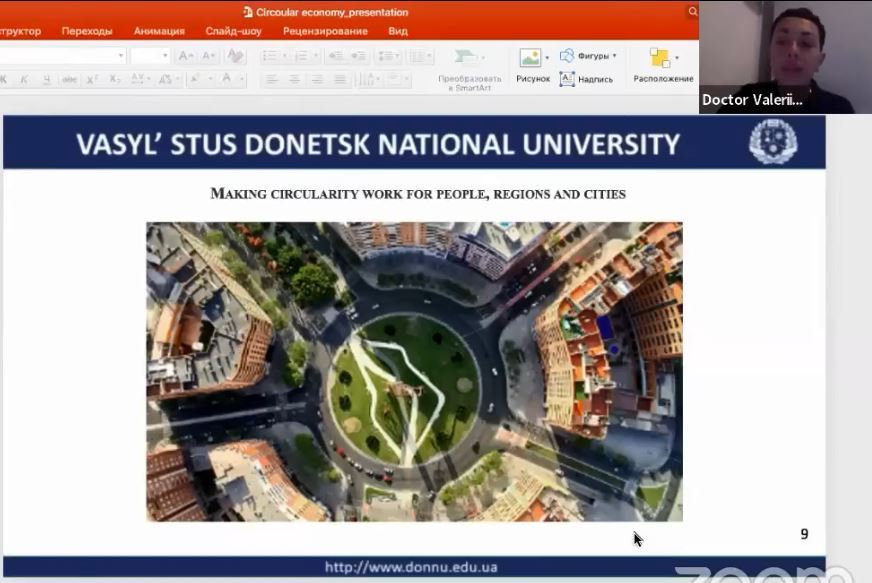
Circularity needs to be pursued so that it can be used for citizens. The European Commission recognizes the need to "make a circular economy work for people, regions and cities". Innovation, education and major changes in urban mobility and planning are necessary steps towards circular cities and regions. The circular economy is about involving people - everyone! It is about a process of co-creation in which civil society, administration, corporations and science are involved. It's about experimenting and trying new approaches, understanding the role played by human behavior and how to encourage behavior change when needed. In our recent workshop Nudging and Beyond: Consumers towards Green Behavior, as part of the EU Stakeholder Conference on the Circular Economy 2020, we examined how existing knowledge from the behavioral sciences and circular economy can be translated into a step-by-step process that facilitates consumers to behave in a circular manner. Conversely, analyzing citizen behavior can also shed light on where intervention in the system is needed to make it work for society. In our CSCP Consumer Insight Action Panel initiative, we do just that, looking at the specific circular aspirations of our participants and examining the components of their behavior to find the right circular economy solutions. The circular economy is not just a technological achievement and human behavior "variables" are often overlooked but need to be considered when designing a successful circular system.
Webinar International 2022 - The advantages of green engineering part 5
International Webinar
Back to News
International Webinar
Wednesday, November 30, 2022
Priyadi, S.Kom, M.Kom
0 Views