
STEKOM university lecturer explains about the application of nanoparticles in the real world. The application of nanotechnology to medicine has created an interdisciplinary research field, often referred to as nanomedicine, which has the potential to significantly improve the way many diseases are treated. In the nascent but rapidly growing field of nanomedicine, personalized drug application is one of the most promising and exciting innovations. Personalized medicine comprises health strategies in which specific therapies are prescribed to patients based on genetic, phenotypic and environmental factors that influence response to therapy. It has long been recognized that different patients respond differently to the same drug in terms of efficacy and safety due to the complexity and heterogeneity of the disease and the patient. For example, some drugs and doses cause adverse health effects in certain patient populations while different patient populations respond well to drug treatment with minimal side effects. Likewise, there may be marked variability in efficacy as well. With increasing understanding of genomics and the emergence of new technologies for molecular profiling investigations and patient genetic mapping, personalized medicine is poised to begin to reach its full potential.
The application of nanomaterials to medical problems has demonstrated clinical impact in terms of delivery strategies of various bioactive molecules, including therapeutic agents, nucleic acids, and imaging contrast agents. Nanotechnology allows combinatorial libraries of nanoparticles to be synthesized with precise control over surface modifications (e.g., targeting portion, payload modification, stealth), size, shape, and other particle characteristics that can be filtered to find the best particle properties for patient-specific therapy. There are already examples of nanomedicine in clinics. Doxil®, a PEGylated liposomal doxorubicin formulation, was the first nano-sized therapy on the market in 1995 and is used as an effective treatment for metastatic breast cancer and recurrent ovarian cancer. Other systems are in various stages of preclinical and clinical progress. For example, a targeted therapeutic nanoparticle, named BIND-014, which accumulates in tumors while avoiding uptake by healthy cells has shown promising results in ongoing clinical trials. Another example is the lipid nanoparticulate delivery system (Oncoprex®) containing the DNA plasmid encoding the tumor suppressor TUSC2 which is being studied in combination with erlotinib, a human epidermal growth factor receptor (EGFR) inhibitor, in lung cancer patients unresponsive to erlotinib or lacking EGFR mutations. Preclinical studies in animals demonstrated that intravenous TUSC2 nanoparticles act synergistically with erlotinib to overcome drug-induced resistance by simultaneously inactivating the EGFR pathway and by inducing apoptosis in resistant cells. A phase II clinical trial evaluating intravenous TUSC2 nanoparticles in combination with erlotinib will begin in 2012. This will provide two possible therapeutic options depending on tumor expression of EGFR: EGFR inhibitor monotherapy or in combination with the nanoparticles. Advances have also been made in the development of versatile nanocarriers that emphasize patient-specific treatments. For example, Zhang and colleagues recently proposed red blood cell (RBC) membrane-coated nanoparticles to evade the immune system and exhibit longer retention times in blood. This approach represents an elegant methodology but difficult to apply clinically: the patient's RBCs are pooled and aspirated to leave only the membrane, the latter of which is then incorporated with the preformed polymer nanoparticles. Therefore, the resulting RBC-coated nanoparticles are dotted with the patient's own proteins and cell membranes to evade host defense mechanisms.
The above material was presented by a presenter from Bangladesh in an international webinar held by STEKOM University in collaboration with the University of Bangkadesh and various other parties. The name of the presenter is Marastika Wicaksono Aji Bawono, S.Kom., M.M., M.Kom. who is a lecturer at STEKOM University, Indonesia.
This international webinar activity is part of the implementation of STEKOM University's commitment to increase various international activities. This was done in order to realize the vision to become an international-class university. Various international activities carried out by STEKOM University continue from year to year. There are international activities that are sustainable and there are also some international activities that are not sustainable. All types of international activities are accommodated and regulated by the International department of STEKOM University.
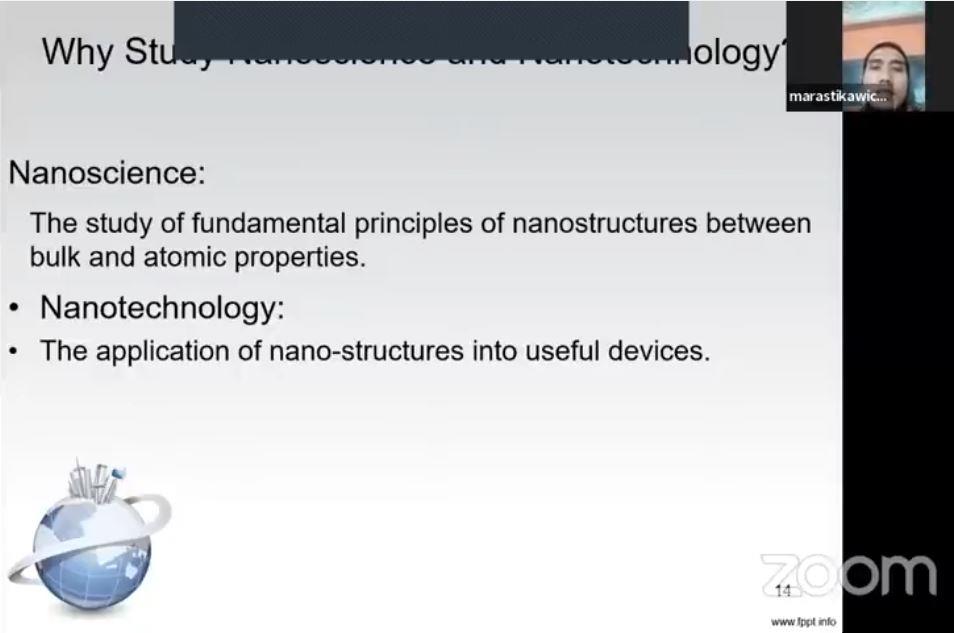
International Webinar 2022 - Implementation of Nano Technology in Food Industry - part 10
International Webinar
Kembali ke Berita
International Webinar
Minggu, 15 Januari 2023
Priyadi, S.Kom, M.Kom
0 Dilihat