
Green technology, eco-friendly technology is developed and used in a way to protect the environment and restore nature. Regardless of the renewable energy branch of the environmental technology movement, the importance of green technology cannot be overlooked. We have come to a point, where we need to pause and diminish the importance of green technology and why it matters to humanity.
The four pillars of green technology sustainability are Human, Social, Economic and Environmental. Those are 4 different areas where sustainability needs to be pursued to have sustainable development, therefore identified as the four pillars of sustainability.
Development is ultimately a sweet spot where human, social, environmental and economic needs can be met simultaneously without neglecting one another. For example, a business is said to be sustainable when:
- Profitable and growing.
- Cares for its employees by paying reasonable wages, offering benefits and education.
- Caring for the local community and society at large by supporting local charities.
Respect for the environment thanks to sustainable product design and green technology
This is because sustainable development is at the crossroad of human, social, economic and environmental types of sustainability. Let's now explore in more detail the different types of pillars of sustainable development.
The four pillars of sustainable development are Human, Social, Economic and Environmental and these four areas must have the right balance to achieve sustainability. That is, as many examples of sustainable development show, if a company focuses only on profits (the economic side), it is unsustainable because the environment, society and people will sooner or later show up for the bill.
Human sustainability focuses on nurturing and developing the human component of an organization and society in general. Examples of human sustainability include such things as access to food, air, health care, education, justice, fair working conditions, skills development, and respect for human rights in general.
Among the four principles, the social pillar of sustainability focuses on peace, enhancing social relations, inclusiveness and equality. Preserving the local culture (cultural sustainability), and promoting honesty, and reciprocity within local communities are some of the fundamental factors that contribute to achieving the UN's social sustainable development goals (SDG).
Adding economic value is also an indirect indication that the company provides something useful and of value to society. This is the basis of the free market: if your product is useless or too widely available in the market, you will hardly make a profit from it.
Environmental sustainability aims to improve human welfare and long-term sustainability with environmental restoration and a more rational use of natural resources. Ecological sustainability is the last of the four pillars of launching and promoting a business model that does not harm the environment and society, while at the same time achieving economic growth.
The presenter who delivered the material was Mr. Wibi Ardi Alvianto. Mr. wibi is a STEKOM university lecturer in the Graphic Design study program. The title of the material presented was "Advantages and Disadvantages of Green Engineering". As one of the options in technological engineering, of course this type of engineering has both advantages and disadvantages. By understanding these two issues, we will be able to decide and anticipate correctly if we decide to use green engineering in our projects.
The webinar activity is part of the implementation of STEKOM University's commitment to increase various international activities in order to realize the vision to become an international-class university. Various international activities carried out by STEKOM University continue from year to year. There are international activities that are sustainable and there are also some international activities that are not sustainable. All types of activities are accommodated internationally and regulated by the International department of STEKOM University.
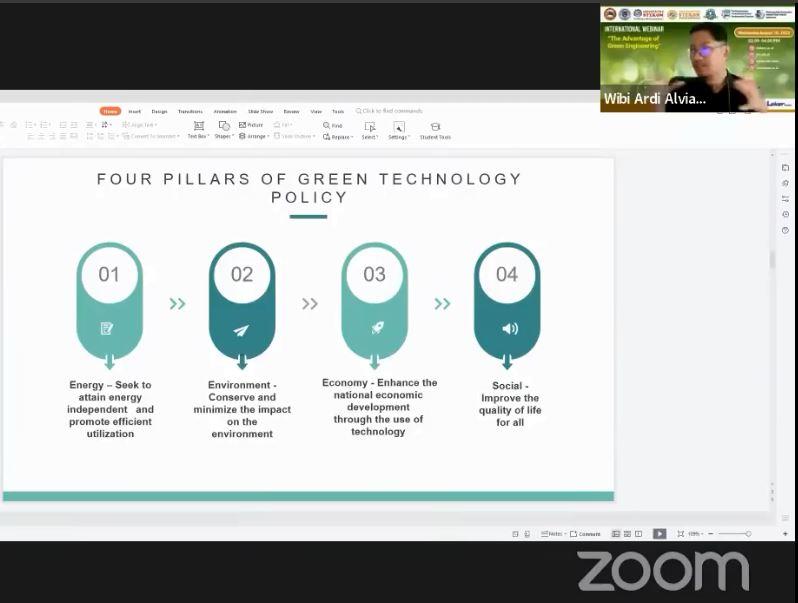
International Webinar 2022 - The excellence of green engineering part 27
International Webinar
Kembali ke Berita
International Webinar
Minggu, 11 Desember 2022
Priyadi, S.Kom, M.Kom
0 Dilihat